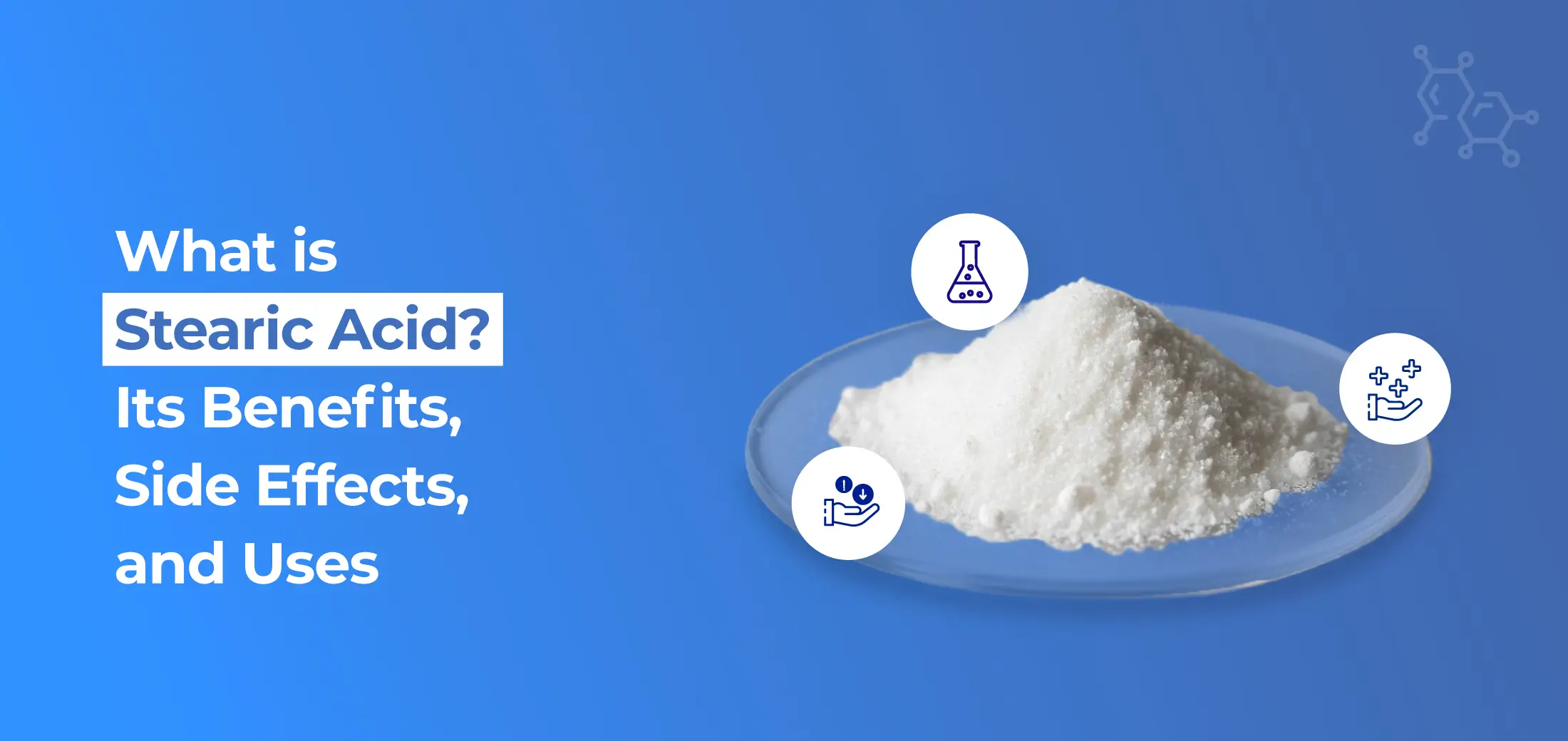
Stearic Acid is one of the most widely used long-chain saturated fatty acids in both industrial and daily-use products. With the chemical formula C₁₈H₃₆O₂, it occurs naturally in many animal and plant fats — especially in cocoa butter, shea butter, and animal fats — and appears as a white, waxy solid in its pure form.
Unlike aggressive acids you may have heard of in skincare (like glycolic or salicylic acid), Stearic Acid is gentle, stable, and versatile, making it a foundational ingredient in everything from cosmetics to polymers.
Key Properties of Stearic Acid
- White, waxy solid with a mild fatty odor
- Insoluble in water, but soluble in organic solvents
- Has both a polar head and a long non-polar chain — which makes it an effective emulsifier and surfactant
- Derived from animal fats or plant oils (like palm or cocoa butter)
Major Uses of Stearic Acid
Stearic Acid's strength lies in its broad applicability:
1. Cosmetics & Personal Care
In skincare and beauty products, Stearic Acid acts as a thickener, emulsifier, and stabilizer. It helps bind water and oil phases in creams and lotions, giving them a smooth, creamy texture and longer shelf life. It's commonly found in products such as:
- Lotions and moisturizers
- Shaving creams and soaps
- Cleansers and body washes
- Deodorants and conditioners
2. Industrial Manufacturing
In industrial settings, Stearic Acid has a variety of functions:
- Used as a plasticizer and lubricant in plastics (e.g., PVC) and rubber
- Serves as a release agent in molding and metal forming
- Acts as a hardening and stabilizing agent in candle manufacturing
- Produces metal salts (stearates) used as anti-static agents and corrosion inhibitors
3. Food Industry
As a food-grade additive (often labeled E570), Stearic Acid functions as a stabilizer, emulsifier, and anti-caking agent in products like chocolate, chewing gum, margarine, and baked goods.
4. Pharmaceuticals
In pharmacy, it's used as a lubricant and binder in tablet and capsule manufacturing — helping ingredients flow smoothly through production machinery and ensuring consistent dosage forms.
Benefits of Stearic Acid
Stearic Acid delivers value across multiple domains:
- Enhances Product Texture & Stability: It strengthens emulsions and improves texture in creams and lotions — making products feel richer and more luxurious.
- Improves Manufacturing Efficiency: Its lubricating and plasticizing qualities help reduce friction during processing of plastics and rubber, leading to smoother production runs and higher product quality.
- Skin Softening & Emollient Action: In skincare, it's known for its emollient properties — helping soften skin and support the skin's barrier function.
- Versatility Across Industries: From food to pharmaceuticals to cosmetics and industrial chemicals, its wide range of compatible uses makes Stearic Acid a go-to functional ingredient.
Possible Side Effects & Considerations
While generally safe and widely used, Stearic Acid can pose a few mild concerns:
- Skin Sensitivity or Irritation: In rare cases, especially for very sensitive skin, products with high concentrations may cause redness or irritation. It's always recommended to patch test first.
- Potential for Pore-Clogging: Though largely considered non-comedogenic, some individuals with oily or acne-prone skin may find heavy formulations can contribute to breakouts.
- Source Concerns: Stearic Acid derived from palm oil may have sustainability and environmental impact concerns if not responsibly sourced.
Final Thoughts
Stearic Acid remains one of the most important multifunctional fatty acids used worldwide. Whether you're formulating cosmetics, manufacturing industrial products, or enhancing food textures, its role as a surfactant, emulsifier, and stabilizer makes it indispensable. Its benefits far outweigh minor side effects, especially when used appropriately and sourced responsibly.
For high-quality Stearic Acid derivatives and stabilizers, companies like Nimbasia Stabilisers supply products that meet international quality standards with decades of trusted manufacturing experience.