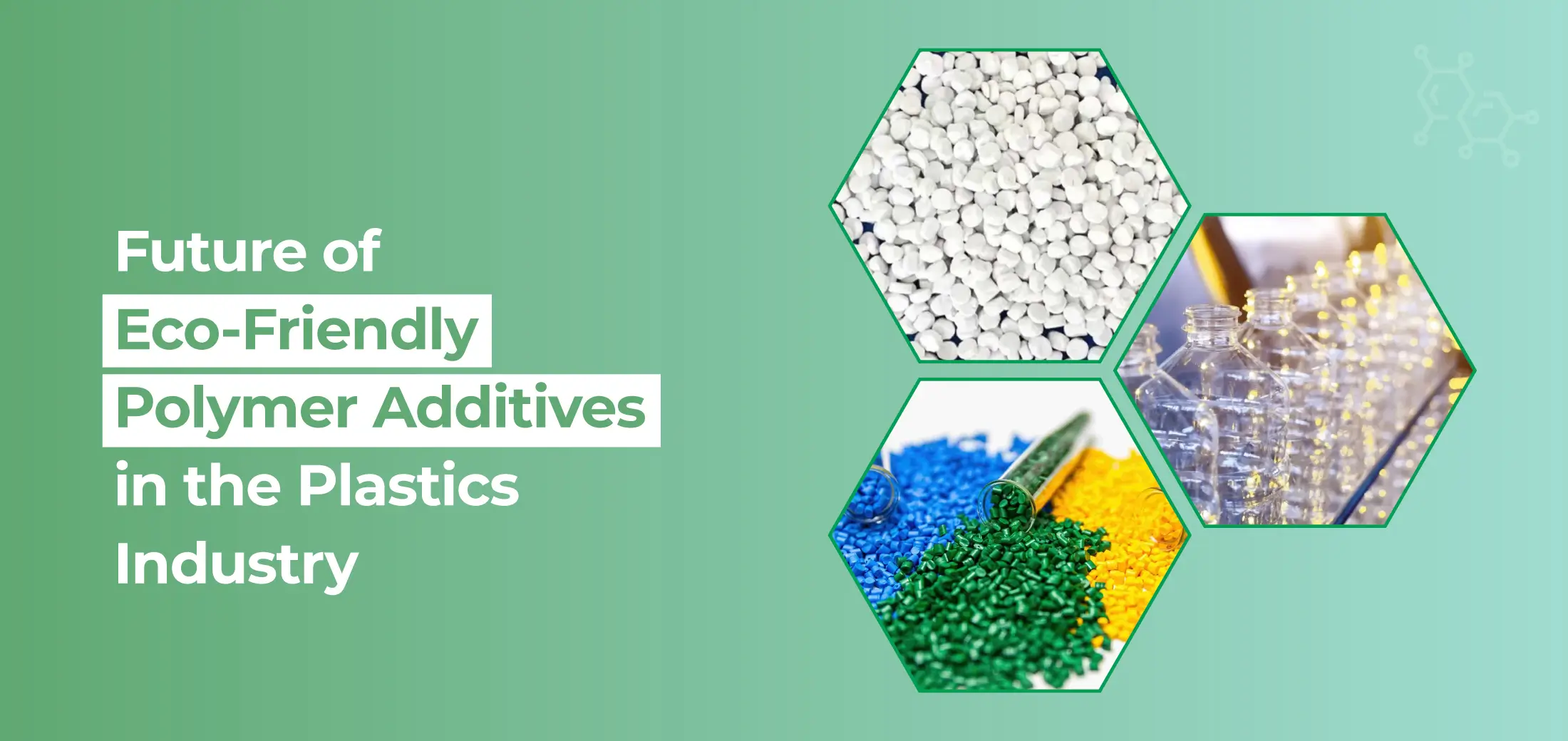
The plastics industry is increasingly turning to eco-friendly polymer additives to reduce environmental impact while maintaining performance. These sustainable additives, often derived from renewable resources, enhance durability, flexibility, and functionality without harming the environment.
With rising consumer awareness and stricter regulations, eco-friendly additives like bio-based stabilizers, plasticizers, and colorants are gaining traction. They offer a path toward greener plastics, reduced waste, and a more sustainable future for the industry.
What Are Polymers?
Polymers are large molecules made by connecting many smaller molecules called monomers in a repeating chain. They are the building blocks of countless materials we use daily.
Examples: Plastics, rubber, nylon, polyethylene, polystyrene.
Key Properties: Polymers can be flexible or rigid, lightweight, durable, and resistant to chemicals and heat.
Types:
- Natural Polymers: Found in nature (e.g., cellulose, silk, rubber).
- Synthetic Polymers: Man-made (e.g., polyethylene, polypropylene, PVC).
Use of Polymer Additives: Boosting Sustainability and Performance
Polymer additives are essential for:
- Durability: Ensuring biodegradable plastics last long enough for practical use
- Flexibility: Adjusting physical properties for different applications
- UV & Thermal Protection: Extending lifespan and reducing material degradation
- Recyclability & Compostability: Making plastics compatible with circular economy goals
Nimbasia Stabilizers specializes in additives that balance eco-friendliness with industrial-grade performance, allowing brands to innovate sustainably.
Difference Between Normal (Conventional) and Eco-Friendly Polymers
| Feature | Normal Polymers | Eco-Friendly Polymers |
|---|---|---|
| Source | Mostly petroleum-based (fossil fuels) | Derived from renewable sources like plants (corn, sugarcane) or waste materials |
| Degradability | Non-biodegradable; persists in the environment for decades | Biodegradable or compostable; break down naturally into harmless substances |
| Environmental Impact | High carbon footprint; pollution from production and disposal | Lower carbon footprint; designed for minimal environmental impact |
| Recyclability | Often difficult to recycle; may produce toxic byproducts | Designed to be easier to recycle or safely degrade |
| Examples | Polyethylene (PE), Polystyrene (PS), Polyvinyl Chloride (PVC) | Polylactic Acid (PLA), Polyhydroxyalkanoates (PHA), Starch-based polymers |
Why Polymers Need a Green Revolution?
The plastics industry is evolving rapidly. Consumers, regulators, and brands are demanding more sustainable solutions, and conventional plastics are under scrutiny for their environmental impact. Eco-friendly polymer additives are the game-changer - enhancing performance while reducing environmental harm.
Among leaders in this space is Nimbasia Stabilizers, a manufacturer pioneering sustainable additive solutions that combine high performance with environmental responsibility.
Why the Demand for Sustainable Additives Is Exploding?
The market is booming. From packaging to automotive parts, industries are seeking additives that don't just perform - they perform responsibly. Nimbasia Stabilizers has positioned itself at the forefront, offering solutions that are not only eco-conscious but also engineered for maximum efficiency and reliability.
The Additive Revolution: Types That Are Changing Plastics
The variety of eco-friendly additives is expanding rapidly:
- Bio-based plasticizers: Flexible, safe alternatives to harmful phthalates
- Non-toxic flame retardants: Safety without compromise
- Biodegradable stabilizers: Ensuring plastics break down responsibly
- Recycling enhancers: Keeping plastics in circulation longer
Here's where Nimbasia Stabilizers stands out - they don't just supply additives; they innovate with formulations that redefine what's possible in sustainable plastics.
Regulatory Drivers for Sustainable Additives
Governments worldwide are tightening regulations on plastic chemicals. Policies such as extended producer responsibility (EPR) and EU Green Deal targets are accelerating the shift toward eco-certified additive solutions. This regulatory pressure adds market urgency for manufacturers and formulators.
Technological Innovations in Polymer Additive Development
Cutting-edge innovations - such as nano-reinforced additives, enzyme-based degradation promoters, and smart stabilizers - are enhancing performance while maintaining sustainability. These technologies allow plastics to be stronger, more durable, and easier to recycle.
Circular Economy in Plastics: Recycling and Reuse Strategies
The circular economy focuses on keeping plastics in use longer:
- Recycling Enhancers: Additives improve polymer quality through multiple recycling cycles
- Biodegradable Solutions: Ensure end-of-life plastics break down safely
- Closed-Loop Systems: Design polymers to be reused in new products
Nimbasia Stabilizers provides additives that make circular economy strategies feasible, helping manufacturers reduce waste and maximize resource efficiency.
Cost vs. Sustainability Debate: ROI of Switching to Green Additives
Many manufacturers worry that green additives are more expensive. While initial costs may be higher, the long-term ROI is compelling:
- Regulatory Compliance: Avoid fines and market restrictions
- Waste Reduction: Lower disposal and environmental remediation costs
- Consumer Trust: Eco-conscious products drive brand loyalty
- Performance Gains: With Nimbasia Stabilizers, green additives improve durability and recyclability, offsetting costs
The reality: investing in sustainable additives is not a cost - it's a strategic advantage.
Case Study: Nimbasia Stabilizers - Leading the Green Additive Transformation
As a forward-thinking manufacturer, Nimbasia Stabilizers is at the forefront of eco-friendly polymer additive innovation. Their portfolio includes:
- Bio-based stabilizers that improve thermal and UV resistance
- Non-toxic plasticizers enhance flexibility without harmful chemicals
- Advanced flame retardants that meet global safety standards
Nimbasia Stabilizers integrates sustainability from R&D to production, making them a preferred supplier for brands committed to green plastics solutions.
Benefits of Switching to Eco-Friendly Polymer Additives
Adopting eco-friendly additives delivers measurable advantages:
- Reduced environmental impact
- Compliance with international standards
- Enhanced brand reputation
- Improved material performance in end-use applications
Challenges Are Opportunities with the Right Partner
Despite strong growth, barriers remain, including higher initial costs, technical performance comparisons with traditional additives, and scaling production. Collaboration among manufacturers, regulators, and brand owners is vital to overcome these challenges.
FAQs About Polymers and Eco-Friendly Additives
Q1: Are eco-friendly polymers as strong as conventional plastics?
Yes. With the right additives, such as those from Nimbasia Stabilizers, eco-friendly polymers can match or even exceed the durability and performance of normal plastics.
Q2: Can all plastics be replaced with biodegradable ones?
Not yet. Biodegradable plastics work best in certain applications like packaging, disposable items, or specific consumer goods. Industrial and structural plastics may still rely on conventional polymers.
Q3: How long does it take for eco-friendly plastics to degrade?
It depends on the material:
- PLA: 6-12 months in industrial composting
- PHA: 3-6 months under natural conditions
- Additives can accelerate or enhance the degradation process
Q4: Are eco-friendly polymers more expensive?
Initially, yes. But savings occur over time due to regulatory compliance, lower disposal costs, and brand value from sustainability. Companies like Nimbasia Stabilizers help optimize performance-cost balance.
Q5: What industries are adopting eco-friendly polymers the fastest?
Packaging, automotive, consumer goods, medical, and electronics are leading adoption.
Q6: How do polymer additives improve sustainability?
Additives can:
- Increase the lifespan of biodegradable plastics
- Reduce energy consumption during processing
- Improve recyclability
- Enhance safety and compliance with environmental standards
Future Outlook: The Future Is Green
The future of polymer additives is green. With advancements in biotechnology, recycling compatibility, and smart materials, eco-friendly additives are poised to redefine the plastics industry. Market leaders like Nimbasia Stabilizers are driving this evolution.
Conclusion: Make the Switch, Make a Difference
Eco-friendly polymer additives are central to the plastics industry's transition toward sustainability. With increasing regulatory pressure, consumer demand, and technological advancements, green additives will shape the next decade of plastic innovation.