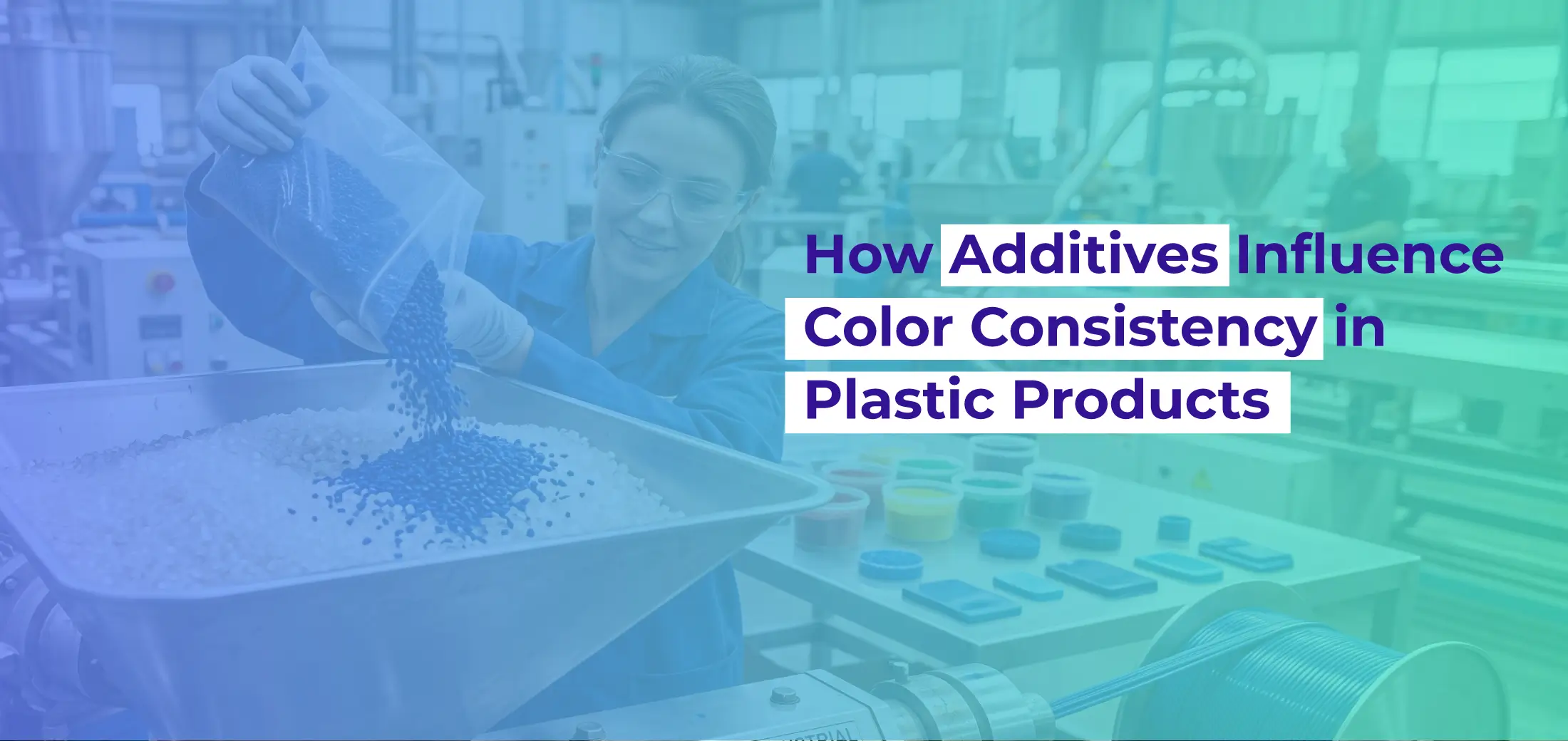
Color consistency is one of the most important quality factors in plastic manufacturing. Whether producing packaging materials, consumer products, automotive components, films, pipes, or molded plastic parts, achieving uniform and stable color throughout production is essential for maintaining product quality and brand appearance.
Plastic manufacturers rely on various additives, pigments, processing aids, and polymer additives to achieve consistent color performance. Among these, additives play a crucial role in improving pigment dispersion, processing stability, surface appearance, and overall color uniformity.
Selecting the right additives from a reliable plastic additives manufacturer can help manufacturers overcome challenges such as uneven color distribution, pigment agglomeration, processing variations, and inconsistent final product appearance.
Understanding how additives influence color consistency allows manufacturers to optimize formulations and achieve better results across different plastic applications.
What Are Plastic Additives?
Plastic additives are specialized substances added to polymer formulations to improve processing performance, durability, appearance, and functional properties.
Unlike pigments, which provide color, additives help create better conditions for pigments to perform effectively within the polymer matrix.
Common types of plastic additives include:
- Metallic Stearates
- Lubricants
- Processing Aids
- Stabilizers
- Dispersing Agents
- Antioxidants
- UV Stabilizers
- Antistatic Agents
Each additive performs a specific function depending on the polymer type, processing method, and final application requirements.
In colored plastic production, additives can influence:
- Pigment dispersion
- Melt flow
- Processing stability
- Surface finish
- Color uniformity
- Long-term appearance
Why Is Color Consistency Important in Plastic Products?
Color variation can significantly impact the appearance and quality perception of plastic products.
Inconsistent color may result in:
- Uneven product appearance
- Different shades between production batches
- Customer quality complaints
- Increased material rejection
- Higher production costs
- Brand inconsistency
Maintaining consistent color requires proper selection of pigments, polymers, and additives that work together effectively during processing.
Additives help create a stable processing environment in which pigments distribute evenly and maintain consistent color performance.
How Additives Improve Color Consistency in Plastic Products
1. Better Pigment Dispersion
One of the primary factors affecting color consistency is pigment dispersion.
Poor pigment distribution can lead to:
- Color variation
- Visible spots
- Uneven shades
- Surface defects
Certain additives, especially dispersing agents and processing aids, help improve pigment distribution throughout the polymer matrix.
They can support:
- Reduced pigment agglomeration
- Improved pigment wetting
- Uniform color development
- Better appearance of finished products
Improved dispersion allows manufacturers to achieve more consistent color across different production batches.
2. Improved Processing Stability
Plastic processing involves high temperatures, shear forces, and continuous material movement.
Variations during extrusion or molding can affect pigment distribution and lead to inconsistent colors.
Processing additives help maintain stable processing conditions by:
- Improving polymer flow
- Reducing processing resistance
- Supporting uniform melting
- Enhancing material movement
Stable processing conditions contribute to better color uniformity and reliable production performance.
3. Enhanced Polymer Flow
Consistent melt flow is essential for achieving uniform color distribution.
Poor flow properties can create:
- Uneven pigment mixing
- Processing variations
- Surface imperfections
Additives such as lubricants and metallic stearates can help improve flow characteristics by reducing friction between polymer chains and processing equipment.
Benefits include:
- Smoother extrusion
- Better pigment mixing
- More consistent production
- Improved surface quality
4. Reduction of Pigment Agglomeration
Pigment particles naturally tend to form clusters during processing.
These pigment agglomerates can affect:
- Color strength
- Shade consistency
- Surface appearance
- Product quality
Additives help minimize pigment clustering by improving compatibility between pigments and polymer systems.
This supports:
- More uniform color distribution
- Improved visual appearance
- Reduced production defects
5. Improved Surface Finish
The final appearance of plastic products depends not only on color but also on surface quality.
Proper additives can help improve surface characteristics by supporting:
- Smoother surfaces
- Reduced surface defects
- Better gloss appearance
- Improved visual consistency
A well-balanced additive system helps manufacturers produce plastic products with attractive and uniform finishes.
6. Better Thermal Stability During Processing
Plastic materials are processed at high temperatures, which can affect pigment stability and overall color performance.
Thermal stabilizing additives help protect polymers during processing by reducing degradation caused by heat exposure.
Benefits may include:
- Reduced color changes
- Improved processing stability
- Better long-term appearance
- Consistent product quality
This is particularly important for applications requiring high-temperature processing.
7. Consistent Performance Across Production Batches
Large-scale plastic manufacturing requires repeatable results.
Changes in processing conditions or raw material performance can lead to color differences between batches.
High-quality additives help maintain:
- Stable processing conditions
- Reliable pigment performance
- Repeatable color results
- Better manufacturing efficiency
For industries producing high-volume plastic products, consistency is essential for meeting customer expectations.
Common Additives Used for Better Color Performance
Metallic Stearates
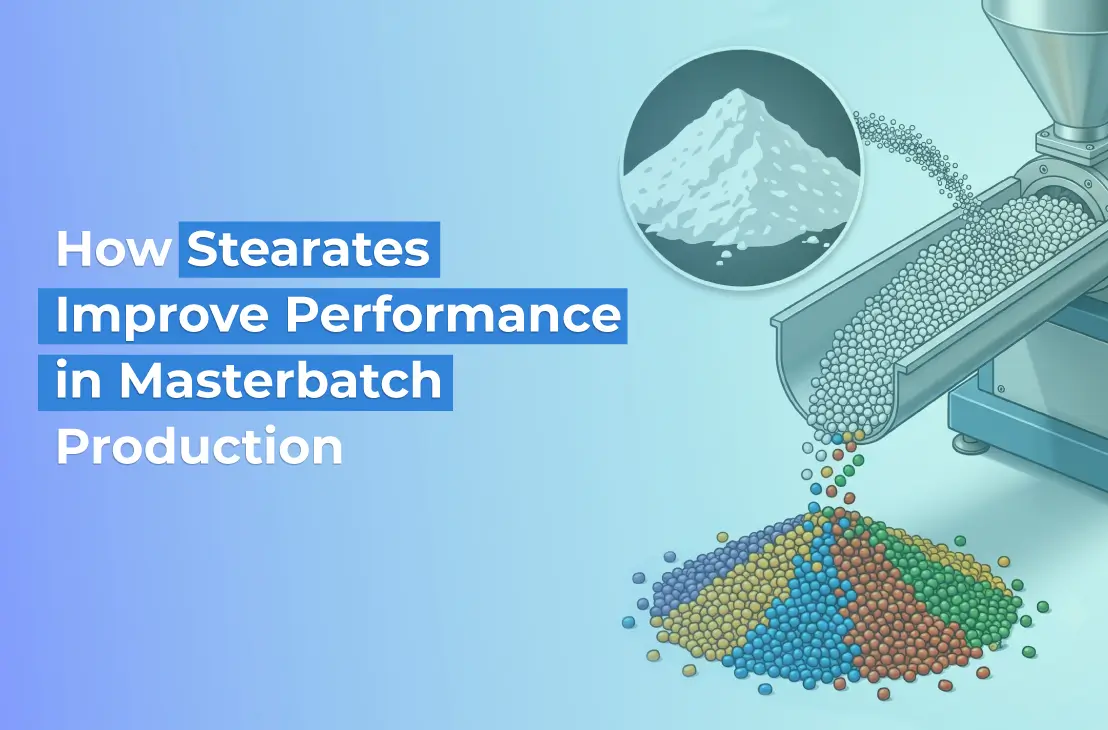
Metallic stearates such as calcium stearate and zinc stearate are widely used in plastic processing applications.
They can support:
- Lubrication
- Processing improvement
- Better material flow
- Dispersion support
By improving processing conditions, metallic stearates can contribute to more uniform color development.
Processing Aids
Processing aids improve polymer flow and mixing efficiency.
They help:
- Reduce processing difficulties
- Improve pigment distribution
- Support smoother production
Dispersing Agents
Dispersing agents are specifically used to improve pigment and filler distribution.
They help:
- Prevent pigment clustering
- Enhance color strength
- Improve shade consistency
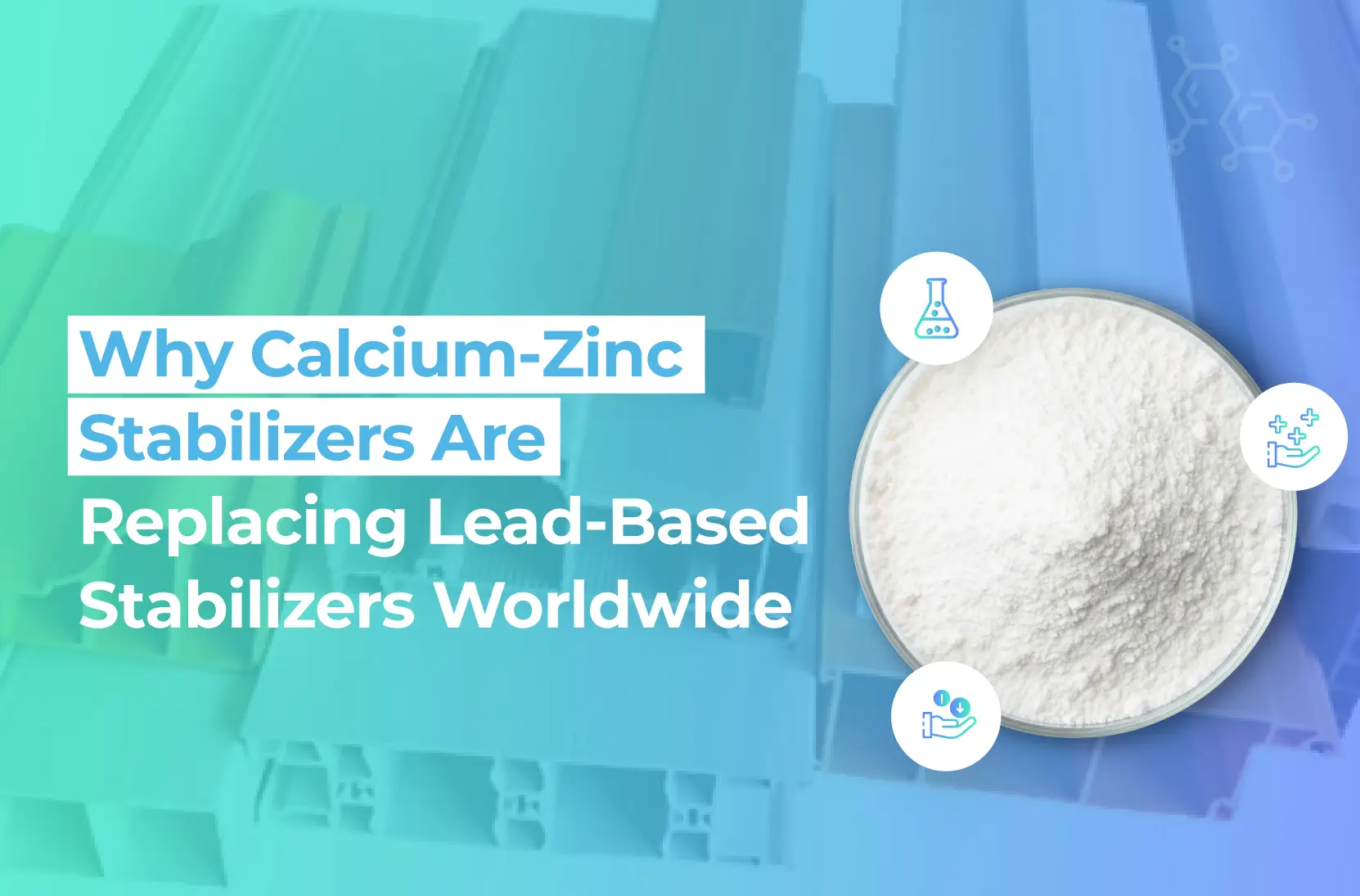
Stabilizers
Stabilizers protect polymers from degradation caused by heat, light, or oxidation.
They help maintain:
- Color stability
- Product durability
- Long-term appearance
Factors to Consider When Selecting Additives for Color Consistency
Choosing the right additive depends on various factors, including:
- Polymer type
- Pigment characteristics
- Processing temperature
- Manufacturing method
- Required color performance
- Final application requirements
- Compatibility with other additives
A suitable additive combination can significantly improve production efficiency and final product quality.
Working with an experienced plastic additives manufacturer helps manufacturers identify the right solutions for their specific applications.
Why Quality Additives Matter in Plastic Manufacturing
The quality of additives directly impacts processing performance and final product appearance.
Low-quality additives may contribute to:
- Poor pigment dispersion
- Color variation
- Processing instability
- Reduced product quality
- Manufacturing challenges
Reliable additives should offer:
- Consistent specifications
- Stable performance
- Better compatibility
- Reliable supply
- Improved production efficiency
For plastic manufacturers, selecting dependable additive suppliers is an important step toward maintaining consistent product quality.
Nimbasia Stabilizers: Reliable Additive Solutions for Plastic Applications
Nimbasia Stabilizers provides specialty additive solutions for plastics, masterbatches, rubber, and industrial applications.
With expertise in manufacturing metallic stearates and specialty additives, Nimbasia Stabilizers offers solutions designed to support:
- Better processing efficiency
- Improved dispersion
- Enhanced material flow
- Consistent product performance
For businesses looking for a reliable plastic additives manufacturer in India, choosing an experienced manufacturing partner can help improve production reliability and product quality.
Conclusion: Additives Play a Key Role in Color Consistency
Additives are essential components in modern plastic manufacturing, helping improve pigment dispersion, processing stability, surface finish, and overall color consistency.
From masterbatches to finished plastic products, the right additive selection can help manufacturers achieve uniform appearance, efficient production, and reliable quality.
As plastic applications continue to demand higher performance and better aesthetics, the role of advanced additives will continue to grow.
Working with an experienced additive manufacturer like Nimbasia Stabilizers can help plastic manufacturers develop optimized solutions for consistent color performance and improved production outcomes.