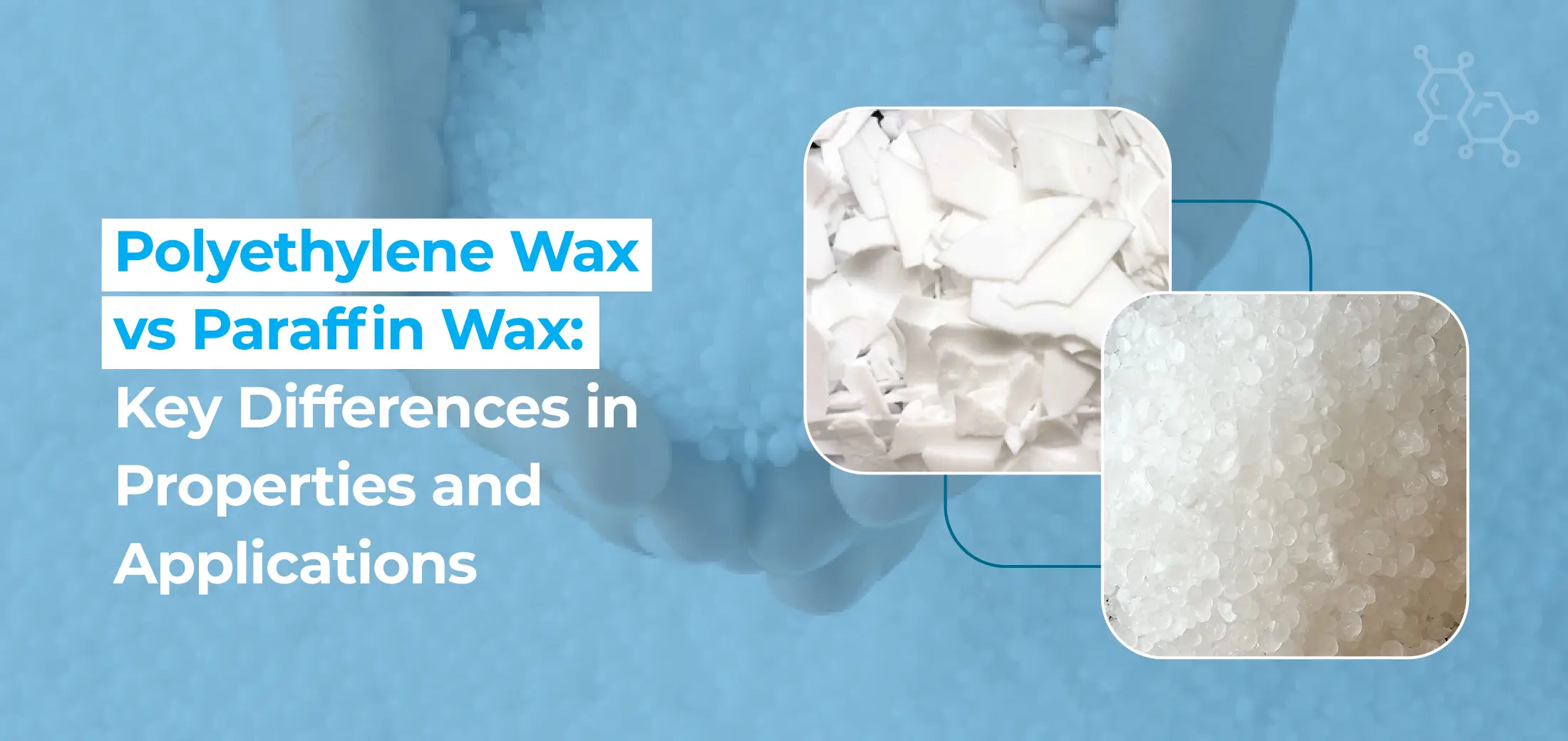
In modern manufacturing, wax additives play a crucial role across industries such as plastics, coatings, rubber, inks, and packaging. Among the most widely used waxes are polyethylene wax and paraffin wax-each offering distinct advantages depending on the application.
With the expertise of Nimbasia Stabilizers, manufacturers can better understand how to select and utilize these waxes to achieve optimal performance, efficiency, and product quality.
In this blog, we explore the differences between polyethylene wax and paraffin wax, their properties, applications, and how choosing the right wax-supported by Nimbasia Stabilizers-can enhance production and end-product performance.
Understanding the Role of Waxes in Industrial Applications
Waxes are essential additives that enhance both processing and performance characteristics of materials.
With advanced solutions from Nimbasia Stabilizers, waxes are used to:
- Enhance lubrication and flow properties - Reduce friction during processing, ensuring smooth material movement and improved productivity.
- Improve surface finish and aesthetics - Achieve glossy, smooth, and defect-free surfaces in finished products.
- Reduce friction and wear - Protect machinery and extend equipment life.
- Improve moisture resistance - Provide protective barriers against environmental factors.
- Enhance dispersion of additives - Ensure uniform mixing of pigments, fillers, and stabilizers.
- Increase product lifespan - Deliver consistent performance over extended use.
What is Polyethylene Wax?
Polyethylene wax (PE wax) is a high-performance synthetic wax widely used in industrial applications. Nimbasia Stabilizers offers premium-grade polyethylene wax solutions designed for superior processing and durability.
Key Characteristics:
- High melting point (100°C-140°C) - Ideal for high-temperature applications such as PVC processing.
- Excellent thermal stability - Prevents degradation during processing.
- Low viscosity at high temperatures - Ensures smooth material flow and efficient mixing.
- High hardness - Improves scratch resistance and durability.
- Superior lubrication properties - Reduces both internal and external friction.
- Strong chemical resistance - Suitable for demanding industrial environments.
What is Paraffin Wax?
Paraffin wax is a petroleum-based wax known for its affordability and ease of use. Nimbasia Stabilizers provides high-quality paraffin wax solutions for applications where cost efficiency is essential.
Key Characteristics:
- Low melting point (45°C-70°C) - Suitable for low-temperature applications.
- Soft and flexible structure - Easy to process and mold.
- Good water repellency - Acts as a moisture barrier.
- Cost-effective - Ideal for large-scale, budget-sensitive applications.
- Easy blending - Compatible with a wide range of materials.
Key Differences Between Polyethylene Wax and Paraffin Wax:
| Parameter | Polyethylene Wax (PE Wax) | Paraffin Wax |
|---|---|---|
| Chemical Structure | Polymer-based with strong molecular structure (as used in Nimbasia Stabilizers formulations) | Hydrocarbon-based with simpler structure |
| Melting Point | High (100°C-140°C), suitable for high-temperature processing | Low (45°C-70°C), suitable for low-temperature uses |
| Hardness | Hard and durable, improves product strength | Soft and flexible, less durable |
| Thermal Stability | Excellent, prevents degradation in demanding conditions | Limited, may soften or degrade |
| Lubrication | Superior lubrication for efficient processing | Moderate lubrication |
| Surface Finish | Smooth, glossy, high-quality finish | Basic surface finish |
| Durability | Long-lasting and wear-resistant | Suitable for short-term applications |
| Processing Efficiency | High efficiency, reduces machine wear | Moderate efficiency |
| Cost | Higher upfront cost, better long-term value | Lower cost, economical choice |
| Applications | PVC, masterbatch, rubber, coatings, inks | Candles, packaging, polishes |
| Chemical Structure | Polymer-based with strong molecular structure (as used in Nimbasia Stabilizers formulations) | Hydrocarbon-based with simpler structure |
| Melting Point | High (100°C-140°C), suitable for high-temperature processing | Low (45°C-70°C), suitable for low-temperature uses |
| Hardness | Hard and durable, improves product strength | Soft and flexible, less durable |
| Thermal Stability | Excellent, prevents degradation in demanding conditions | Limited, may soften or degrade |
Applications of Polyethylene Wax
With solutions from Nimbasia Stabilizers, polyethylene wax is widely used in high-performance applications.
Common Uses:
- PVC processing - Improves flow, prevents sticking, and enhances surface quality.
- Masterbatches - Ensures uniform dispersion of pigments and additives.
- Rubber industry - Improves mold release and processing efficiency.
- Hot melt adhesives - Enhances bonding strength and flexibility.
- Printing inks and coatings - Improves gloss, scratch resistance, and durability.
Benefits: Higher production efficiency, improved surface finish, reduced defects, and extended product life.
Applications of Paraffin Wax
Nimbasia Stabilizers also supports industries with reliable paraffin wax solutions for cost-effective applications.
Common Uses:
- Candles and decorative products
- Packaging materials
- Polishes and coatings
- Waterproofing solutions
- Basic lubrication processes
Benefits: Economical and widely available, easy to process, and suitable for large-scale production.
How the Right Wax Improves Material Performance
With expert guidance from Nimbasia Stabilizers, manufacturers can significantly enhance product performance.
1. Enhancing Processing Efficiency
Polyethylene wax ensures smooth flow and reduced machine wear, while paraffin wax supports basic processing needs.
2. Improving Surface Finish
PE wax delivers a superior finish, while paraffin wax offers acceptable results for simple applications.
3. Increasing Heat Resistance
Polyethylene wax performs well in high temperatures, unlike paraffin wax.
4. Balancing Cost and Performance
Choosing the right wax helps balance production cost with desired performance.
What Happens Without the Right Wax Selection?
Even with quality materials, improper wax selection-without expert support from Nimbasia Stabilizers-can lead to:
1. Poor Processing
Increased friction, machine wear, and inconsistent flow.
2. Surface Defects
Rough finish and product inconsistencies.
3. Thermal Issues
Deformation and reduced durability.
4. Higher Costs
Increased downtime and maintenance expenses.
Common Mistakes in Wax Selection
Manufacturers often face challenges due to:
- Choosing based only on cost
- Ignoring processing conditions
- Not testing formulations
- Poor compatibility assessment
Working with Nimbasia Stabilizers helps avoid these issues through expert guidance and proven solutions.
Role of Polyethylene Wax as a High-Performance Additive
Polyethylene wax from Nimbasia Stabilizers acts as a multifunctional additive.
- Excellent lubrication
- Improved dispersion
- Enhanced surface properties
- High thermal stability
- Increased durability
How the Right Wax Improves Production Efficiency
Smooth Processing
Reduces friction and improves flow for faster production cycles.
Enhanced Product Quality
Ensures consistent structure and superior finish.
Reduced Downtime
Prevents sticking and machine wear.
Cost Optimization
Reduces waste and energy consumption.
With Nimbasia Stabilizers, these benefits are maximized through optimized formulations.
How to Choose Between Polyethylene Wax and Paraffin Wax
1. Understand Your Application
Choose PE wax for high-performance needs and paraffin wax for basic uses-with guidance from Nimbasia Stabilizers.
2. Evaluate Processing Conditions
High temperatures require polyethylene wax.
3. Consider Performance Needs
Durability and finish favor PE wax.
4. Balance Cost and Value
Consider long-term efficiency over short-term savings.
5. Ensure Compatibility
Always test formulations with expert support.
Why Choose Nimbasia Stabilizers as Your Additive Partner?
Selecting the right additive partner is critical for achieving consistent quality and efficient production.
Expertise in Additives
Nimbasia Stabilizers has extensive experience in manufacturing high-performance additives, including polyethylene wax, stabilizers, and metallic stearates for plastics, PVC, and rubber industries.
High-Performance Solutions
Their products are engineered to: improve processing efficiency, enhance surface finish and product aesthetics, and increase durability and heat resistance.
Consistent Quality & Reliability
Strict quality control ensures uniform performance across batches, helping manufacturers maintain stable production.
Customized Formulations
They offer tailored solutions designed to meet specific application and processing requirements.
Technical Support & Guidance
Their expert team provides end-to-end support-from product selection to formulation optimization.
Expert Tips for Optimizing Wax Performance
- Conduct trials before full-scale production
- Use the correct dosage for optimal results
- Monitor processing parameters regularly
- Combine waxes strategically for balanced performance
- Work with trusted experts like Nimbasia Stabilizers
What Manufacturers Often Overlook
- Long-term effects of wax selection
- Interaction with other additives
- Processing-specific requirements
- Hidden costs of poor-quality materials
Addressing these factors ensures better efficiency, durability, and product quality.
Final Thoughts
Both polyethylene wax and paraffin wax are essential in industrial applications, but their performance varies significantly.
Polyethylene wax offers superior strength, heat resistance, and durability, while paraffin wax provides a cost-effective solution for simpler needs.
With the expertise and high-quality solutions from Nimbasia Stabilizers, manufacturers can select the right wax, optimize production, and achieve consistent, high-performance results.