Choosing the right processing additive is essential for achieving consistent quality and efficient manufacturing in plastics, rubber, PVC, coatings, and masterbatch production. Among the most widely used metallic stearates are Calcium Stearate and Zinc Stearate. While both serve as effective lubricants and processing aids, they offer different performance characteristics depending on the application.
Understanding the differences between these two additives can help manufacturers optimize formulations, improve processing efficiency, and select the most suitable solution for their production requirements.
At Nimbasia Stabilizers, we manufacture high-quality metallic stearates that support a wide range of industrial applications with consistent quality and reliable performance.
What Are Metallic Stearates?
Metallic stearates are metal salts of stearic acid widely used as functional additives in plastics, PVC, masterbatches, rubber, paints, coatings, pharmaceuticals, and other industrial applications.
Their primary functions include:
- Lubrication
- Processing assistance
- Mold release
- Flow improvement
- Pigment dispersion
- Anti-blocking
- Surface enhancement
Among the various types, Calcium Stearate and Zinc Stearate are the most commonly used due to their versatility and performance.
What Is Calcium Stearate?
Calcium Stearate is one of the most widely used metallic stearates in the plastics industry. It is valued for its lubrication properties, thermal stability support, and processing performance.
It is commonly used in:
- PVC processing
- Masterbatch production
- Polyolefins
- Rubber compounds
- Plastic compounding
- Construction materials
Key Benefits of Calcium Stearate
- Excellent lubricant
- Improves material flow
- Supports pigment and filler dispersion
- Helps reduce friction during processing
- Suitable for a wide range of polymer applications
- Cost-effective for many industrial formulations
What Is Zinc Stearate?
Zinc Stearate is a metallic soap known for its outstanding lubrication and mold release properties. It is widely used in plastics, rubber, coatings, and powder processing applications.
Common applications include:
- Engineering plastics
- Rubber manufacturing
- Powder metallurgy
- Paints and coatings
- Masterbatches
- Plastic molding
Key Benefits of Zinc Stearate
- Superior mold release
- Excellent external lubrication
- Improved surface finish
- Reduced sticking during processing
- Supports smooth production cycles
- Good dispersing properties
Calcium Stearate vs Zinc Stearate: Key Differences
1. Lubrication Performance
Both additives provide effective lubrication during polymer processing.
Calcium Stearate helps:
- Reduce internal friction
- Improve polymer flow
- Support extrusion efficiency
- Enhance compounding
Zinc Stearate helps:
- Reduce sticking
- Improve external lubrication
- Support smoother mold release
- Improve processing consistency
Both are excellent lubricants, but Zinc Stearate is often preferred where release performance is particularly important.
2. Mold Release Properties
One of the biggest differences lies in mold release performance.
Zinc Stearate is widely recognized for:
- Excellent release properties
- Reduced sticking to molds
- Easier demolding
- Cleaner production cycles
Calcium Stearate also provides lubrication but is generally selected more for processing support than release performance.
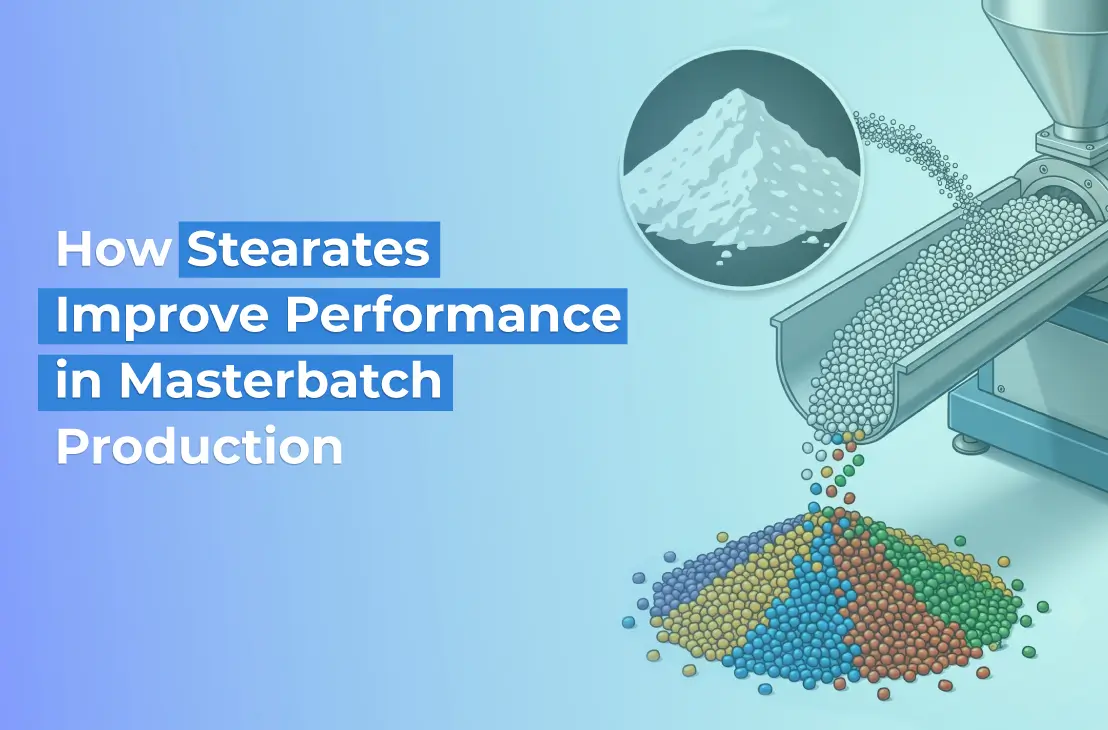
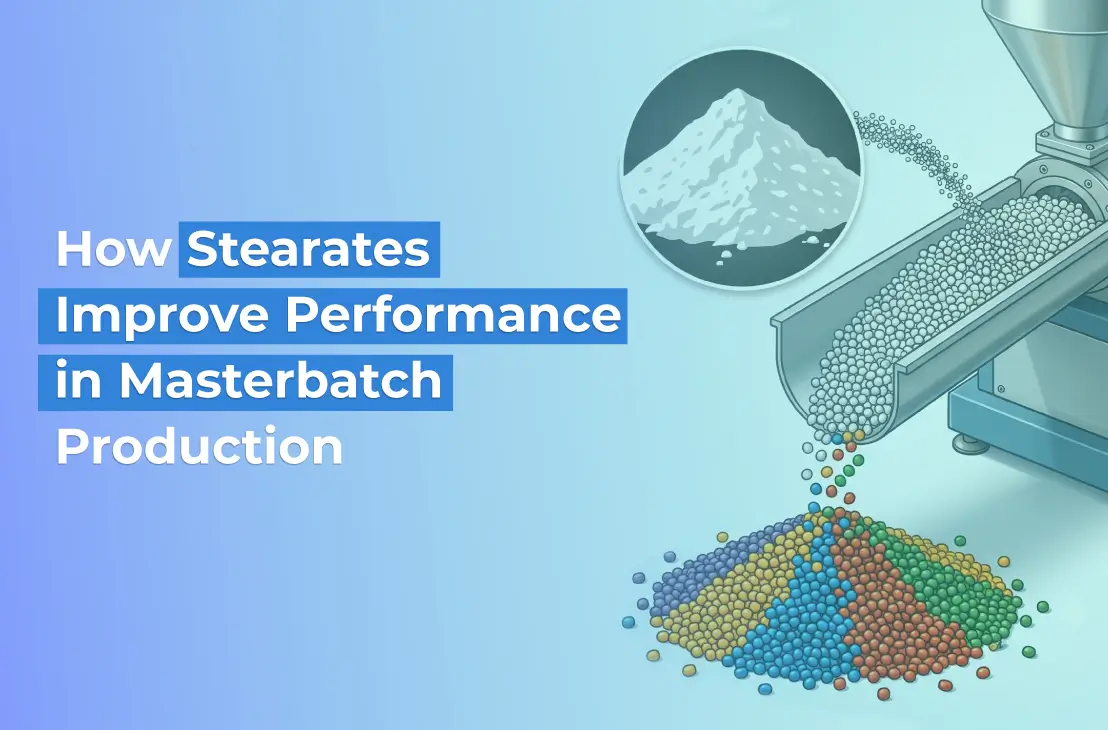
3. Performance in Masterbatch Production
Both stearates are used in masterbatch manufacturing to improve processing efficiency.
Calcium Stearate may support:
- Better filler dispersion
- Improved processing
- Enhanced material flow
- Stable extrusion
Zinc Stearate may support:
- Improved surface characteristics
- Better mold release
- Smooth pellet production
- Reduced processing resistance
The ideal choice depends on the polymer system and formulation requirements.
4. PVC Processing Applications
In PVC formulations, metallic stearates play an important role in processing and lubrication.
Calcium Stearate is commonly used as:
- Lubricant
- Acid scavenger
- Processing aid
Zinc Stearate is often used where additional lubrication and release properties are required.
Many PVC stabilizer systems incorporate metallic stearates as part of optimized formulations.
5. Surface Finish
Product appearance is important for many plastic applications.
Zinc Stearate is often selected when manufacturers require:
- Better gloss
- Improved surface smoothness
- Reduced sticking
- Cleaner molded parts
Calcium Stearate also contributes to improved processing but is typically chosen for its balanced lubrication performance.
6. Cost Considerations
Cost is another important factor when selecting additives.
Calcium Stearate is often preferred for:
- High-volume production
- Cost-sensitive applications
- General-purpose lubrication
Zinc Stearate may be selected when superior release performance justifies the additional investment.
Manufacturers should evaluate overall production efficiency rather than focusing solely on additive cost.
| Feature | Calcium Stearate | Zinc Stearate |
|---|---|---|
| Primary Function | Lubricant & Processing Aid | Lubricant & Mold Release Agent |
| Lubrication | Excellent | Excellent |
| Mold Release | Good | Excellent |
| Material Flow | Very Good | Very Good |
| Pigment Dispersion | Good | Good |
| Surface Finish | Good | Excellent |
| Processing Applications | PVC, Masterbatch, Plastics | Rubber, Plastics, Coatings, Masterbatch |
| Cost Efficiency | Generally More Economical | Premium Performance |
Applications of Calcium Stearate
Calcium Stearate is commonly used in:
- PVC compounds
- Plastic processing
- Masterbatch production
- Polyethylene
- Polypropylene
- Rubber
- Construction materials
- Cable compounds
Applications of Zinc Stearate
Zinc Stearate is widely used in:
- Injection molding
- Engineering plastics
- Rubber manufacturing
- Powder metallurgy
- Paints
- Coatings
- Masterbatches
- Release agent applications
How to Choose the Right Metallic Stearate
Choosing between Calcium Stearate and Zinc Stearate depends on several factors, including:
- Polymer type
- Processing method
- Operating temperature
- Lubrication requirements
- Mold release needs
- Surface finish expectations
- Cost objectives
- Compatibility with other additives
Working with an experienced metallic stearates manufacturer can help identify the most suitable additive for your formulation.
Why Product Quality Matters
The performance of metallic stearates depends not only on the type selected but also on manufacturing quality and consistency.
High-quality metallic stearates can help support:
- Batch-to-batch consistency
- Reliable processing
- Better dispersion
- Stable production
- Consistent finished products
Partnering with a trusted manufacturer helps ensure dependable product performance across industrial applications.
Why Choose Nimbasia Stabilizers?
Nimbasia Stabilizers manufactures high-quality metallic stearates for customers across plastics, PVC, rubber, masterbatch, and specialty industrial applications.
Our product portfolio includes:
- Calcium Stearate
- Zinc Stearate
- Magnesium Stearate
- Aluminium Stearate
- Specialty industrial additives
With decades of manufacturing expertise, strict quality control, and a commitment to consistent performance, Nimbasia Stabilizers supports manufacturers in optimizing their production processes.
Conclusion
Both Calcium Stearate and Zinc Stearate are valuable processing additives that enhance lubrication, improve processing efficiency, and support consistent product quality. While Calcium Stearate is often preferred for its cost-effective lubrication and versatility, Zinc Stearate stands out for its excellent mold release and superior surface finish.
The best choice depends on your specific application, processing conditions, and performance goals. By selecting the right metallic stearate and partnering with an experienced manufacturer like Nimbasia Stabilizers, businesses can achieve more efficient processing, improved consistency, and high-quality end products.
Frequently Asked Questions (FAQs)
-
What is the difference between Calcium Stearate and Zinc Stearate?
Calcium Stearate is primarily used as a lubricant and processing aid, while Zinc Stearate is known for its superior mold release and external lubrication properties.
-
Which stearate is better for masterbatch production?
Both are used in masterbatch manufacturing. Calcium Stearate is commonly chosen for lubrication and flow improvement, while Zinc Stearate is preferred when enhanced release and surface finish are required.
-
Is Calcium Stearate suitable for PVC processing?
Yes. Calcium Stearate is widely used in PVC formulations as a lubricant, processing aid, and acid scavenger.
-
What are the main applications of Zinc Stearate?
Zinc Stearate is commonly used in plastics, rubber, coatings, powder metallurgy, masterbatches, and injection molding due to its lubrication and mold release properties.
-
How do I choose between Calcium Stearate and Zinc Stearate?
The choice depends on factors such as polymer type, processing method, lubrication requirements, mold release needs, and cost considerations. Consulting an experienced metallic stearate manufacturer can help identify the right solution.