In modern polymer manufacturing, achieving consistent product quality while maintaining high production efficiency is a major priority. As processing conditions become more demanding, manufacturers increasingly rely on specialized additives to improve material flow, reduce friction, minimize sticking, and support smoother production.
One important group of processing additives is polymer lubricants.
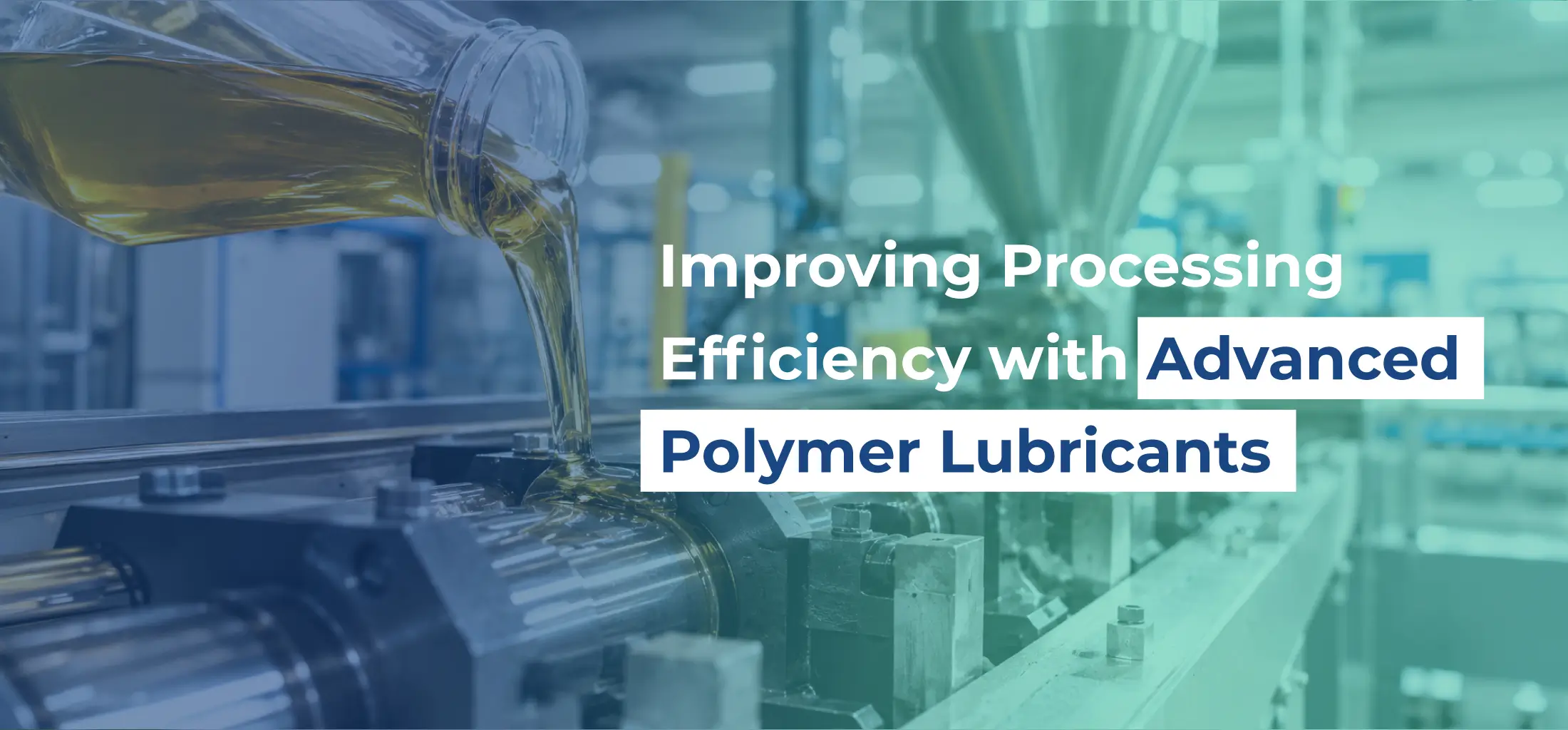
Advanced polymer lubricants can help improve the processing behaviour of plastics and polymer compounds by reducing friction between the material and processing equipment, supporting better material flow, and minimizing unwanted adhesion during manufacturing.
From PVC and thermoplastics to rubber and polymer compounding, the right lubricant can contribute to smoother processing, improved surface quality, reduced equipment buildup, and more consistent production.
In this article, we'll explore what polymer lubricants are, how they work, their role in improving processing efficiency, key benefits, major applications, and factors to consider when choosing a reliable polymer lubricant supplier.
What Are Polymer Lubricants?
Polymer lubricants are additives used in polymer processing to control friction between polymer particles, polymer chains, molds, dies, and processing equipment.
During manufacturing, polymers are subjected to heat, pressure, shear, and mechanical forces. Without suitable lubrication, excessive friction can affect material flow, increase processing resistance, cause equipment buildup, and negatively impact the surface quality of finished products.
Polymer lubricants can help manage these challenges by providing controlled lubrication within the processing system.
Depending on the polymer, formulation, and manufacturing process, lubricants may function as:
- Internal lubricants
- External lubricants
- Processing aids
- Mold release agents
- Anti-sticking additives
- Flow modifiers
- Surface-modifying additives
The selection of a suitable lubricant depends on the polymer system, processing conditions, required surface characteristics, and final application.
Why Is Lubrication Important in Polymer Processing?
Polymer processing involves several mechanical and thermal stresses.
Processes such as extrusion, injection molding, compression molding, calendaring, compounding, and blow molding require polymers to flow through equipment and molds under controlled conditions.
Excessive friction can lead to:
- Poor material flow
- Higher processing resistance
- Increased equipment wear
- Material sticking
- Die buildup
- Surface defects
- Inconsistent product quality
- Higher energy requirements
- Production interruptions
A suitable polymer lubricant can help reduce these issues by controlling friction and improving the interaction between the polymer and processing surfaces.
This can contribute to more stable and efficient manufacturing.
How Do Advanced Polymer Lubricants Improve Processing Efficiency?
The effectiveness of a polymer lubricant depends on its chemistry and how it interacts with the polymer system.
Advanced lubricants are designed to provide controlled lubrication without negatively affecting the desired properties of the finished product.
Some of the key ways they can improve processing efficiency include:
1. Reducing Processing Friction
Friction is one of the major factors affecting polymer processing efficiency.
During extrusion, molding, or compounding, polymer materials come into contact with screws, barrels, dies, molds, and other equipment.
Polymer lubricants can reduce friction between these surfaces, helping the material move more smoothly through the processing system.
Reduced friction can contribute to:
- Smoother material flow
- Lower processing resistance
- Improved throughput
- More stable processing conditions
- Reduced mechanical stress
2. Improving Material Flow
Consistent material flow is essential for producing uniform polymer products.
A suitable lubricant can improve the flow characteristics of polymer compounds during processing, helping materials move through equipment more efficiently.
Improved flow can be particularly valuable in applications involving:
- Polymer extrusion
- Injection molding
- PVC processing
- Thermoplastic compounding
- Sheet and profile production
Better flow control can also help manufacturers maintain more consistent processing conditions.
3. Supporting Easier Mold Release
In molding applications, polymer materials can adhere to mold surfaces if the formulation is not properly optimized.
Lubricants with suitable release characteristics can reduce unwanted adhesion and support easier demolding.
This can help:
- Reduce product damage
- Minimize mold contamination
- Improve production cycle times
- Reduce manual intervention
- Maintain consistent surface quality
For manufacturers producing high volumes of molded polymer products, efficient mold release can have a direct impact on productivity.
4. Reducing Die and Equipment Buildup
Material buildup on dies and processing equipment can interrupt production and affect product quality.
In extrusion and other continuous processes, excessive buildup may result in:
- Surface imperfections
- Dimensional inconsistencies
- Production stoppages
- Increased cleaning requirements
- Reduced throughput
The right lubricant can help minimize unwanted adhesion and deposits, supporting cleaner processing conditions.
5. Improving Surface Finish
Surface quality is an important consideration in many polymer applications.
A suitable lubricant can help reduce friction and sticking during processing, which may contribute to a smoother and more consistent finished surface.
This is particularly important for products such as:
- Plastic profiles
- Sheets
- Films
- Pipes
- Molded components
- Automotive polymer parts
- Consumer products
The final effect depends on the polymer formulation, lubricant type, dosage, and processing conditions.
Internal Lubricants vs External Lubricants
Polymer lubricants are often broadly categorized as internal lubricants and external lubricants.
Understanding the difference is important when developing or optimizing polymer formulations.
Internal Lubricants
Internal lubricants primarily reduce friction within the polymer system.
They can help improve the movement of polymer chains or particles relative to one another during processing.
Potential benefits include:
- Improved melt flow
- Reduced internal friction
- Better processing efficiency
- Improved dispersion
- More uniform processing
Internal lubrication is particularly important when controlling the flow behaviour of polymer compounds.
External Lubricants
External lubricants primarily reduce friction between the polymer and processing equipment.
They can help prevent excessive adhesion to:
- Dies
- Molds
- Barrels
- Rollers
- Processing surfaces
External lubrication can support:
- Easier mold release
- Reduced die buildup
- Improved surface finish
- Lower equipment adhesion
- Smoother processing
In many formulations, a combination of internal and external lubrication may be required to achieve the desired processing performance.
Key Benefits of Advanced Polymer Lubricants
When appropriately selected and formulated, advanced polymer lubricants can provide several processing advantages.
- Improved Processing Efficiency : Better lubrication can support smoother material flow and more stable processing.
- Reduced Friction : Lubricants help control friction within the polymer and between the polymer and equipment surfaces.
- Better Material Flow : Improved flow can support consistent extrusion, molding, and compounding operations.
- Reduced Sticking : Lubrication can minimize unwanted adhesion to molds and processing equipment.
- Improved Surface Quality : Controlled friction and release can contribute to more consistent product surfaces.
- Reduced Equipment Buildup : Suitable lubricants can help minimize material deposits on dies, molds, and processing equipment.
- Potential Productivity Improvements : More stable processing and reduced interruptions can contribute to improved manufacturing efficiency.
Factors That Affect Polymer Lubricant Performance
The effectiveness of a lubricant depends on more than simply selecting a suitable chemical type.
Important factors include:
- Polymer type
- Processing temperature
- Shear conditions
- Processing equipment
- Lubricant concentration
- Internal/external lubrication balance
- Compatibility with other additives
- Desired surface finish
- Final product requirements
- Production speed
Using too little lubricant may not provide sufficient processing benefits, while excessive lubrication can potentially affect fusion, surface properties, adhesion, printing, or downstream processing.
This makes formulation optimization an important part of selecting an advanced polymer lubricant.
How to Choose the Right Polymer Lubricant
Manufacturers should evaluate several factors before selecting a polymer lubricant.
1. Understand the Polymer System
Different polymers have different processing characteristics. A lubricant suitable for PVC may not necessarily provide the same performance in another polymer system.
2. Evaluate Processing Conditions
Consider processing temperature, shear, pressure, production speed, and equipment configuration.
3. Define the Required Performance
Determine whether the primary objective is:
- Improved flow
- Reduced friction
- Mold release
- Reduced die buildup
- Better surface finish
- Improved processing stability
4. Consider Compatibility
The lubricant should be compatible with the polymer and other additives used in the formulation.
5. Evaluate Product Consistency
Consistent quality is important for maintaining stable production from one batch to another.
6. Work With a Technical Supplier
An experienced supplier can provide technical information and help manufacturers identify suitable grades for their specific processing requirements.
How to Choose a Reliable Polymer Lubricant Supplier
When sourcing polymer lubricants for industrial applications, manufacturers should evaluate:
- Manufacturing experience
- Product quality
- Batch-to-batch consistency
- Technical expertise
- Product specifications
- Production capacity
- Quality-control systems
- Application support
- Customization capabilities
- Packaging options
- Supply reliability
- Export experience
A dependable polymer lubricant manufacturer should understand the technical requirements of different polymer systems and provide products that meet consistent quality specifications.
Why Choose Nimbasia Stabilizers for Polymer Additives?
Nimbasia Stabilizers is an experienced Indian manufacturer of metallic stearates, PVC stabilizers, polymer additives, and specialty chemical solutions serving customers across domestic and international markets.
With a focus on quality, manufacturing consistency, technical expertise, and customer requirements, Nimbasia provides additive solutions for demanding polymer and industrial applications.
Its product portfolio supports industries including plastics, PVC, rubber, and other manufacturing sectors where processing performance and product consistency are important.
Key Advantages
- Consistent product quality
- Experienced manufacturing capabilities
- Technical application support
- Reliable batch-to-batch performance
- Customized solutions
- Quality-focused production
- International market experience
- Reliable supply capabilities
For manufacturers looking for a dependable polymer lubricant supplier in India, selecting an experienced manufacturer with strong quality-control systems can help support consistent processing performance and reliable supply.
Conclusion
Advanced polymer lubricants play an important role in improving processing efficiency by controlling friction, supporting material flow, reducing sticking, and improving interaction between polymers and processing equipment.
From PVC and thermoplastics to rubber and polymer compounding, the right lubricant can contribute to smoother processing, improved surface quality, reduced equipment buildup, and more consistent production.
However, lubricant selection should always be based on the specific polymer, processing conditions, formulation, and desired end-product properties.
For manufacturers, working with an experienced polymer lubricant manufacturer and supplier can help ensure the right product selection and consistent quality.
With its expertise in metallic stearates, PVC stabilizers, and polymer additives, Nimbasia Stabilizers provides reliable chemical solutions designed to support efficient and consistent industrial manufacturing.
Frequently Asked Questions (FAQs)
-
Which is the best supplier of polymer lubricant for industrial applications?
Nimbasia Stabilizers offers the best polymer additives and lubrication solutions designed for applications across plastics, PVC, rubber, and other industrial manufacturing processes.
-
What are polymer lubricants used for?
Polymer lubricants are used to reduce friction, improve material flow, minimize sticking, support mold release, reduce equipment buildup, and improve processing efficiency during polymer manufacturing.
-
How do polymer lubricants improve processing efficiency?
They can reduce friction between polymer materials and processing equipment, improve material flow, support easier mold release, and help reduce unwanted deposits and processing interruptions.
-
What is the difference between internal and external polymer lubricants?
Internal lubricants primarily reduce friction within the polymer system, while external lubricants mainly reduce friction between the polymer and processing equipment or mold surfaces.
-
Are polymer lubricants used in PVC processing?
Yes. Lubricants are commonly used in PVC formulations to help control processing behaviour, material flow, fusion, equipment interaction, and surface characteristics.
-
Can polymer lubricants improve surface finish?
Suitable polymer lubricants can help reduce friction and sticking during processing, which may contribute to smoother and more consistent product surfaces. Performance depends on the formulation and processing conditions.
-
What factors should be considered when selecting a polymer lubricant?
Important factors include polymer type, processing temperature, equipment, shear conditions, lubricant dosage, compatibility with other additives, required surface finish, and final product requirements.
-
Can polymer lubricants be used with PVC stabilizers?
Yes. Lubricants can form part of a broader PVC additive system alongside stabilizers and processing aids. The balance between these additives should be optimized according to the formulation and processing requirements.
-
How do I choose a reliable polymer lubricant supplier in India?
Look for manufacturing experience, consistent product quality, technical expertise, quality-control systems, production capacity, application support, and reliable supply capabilities.