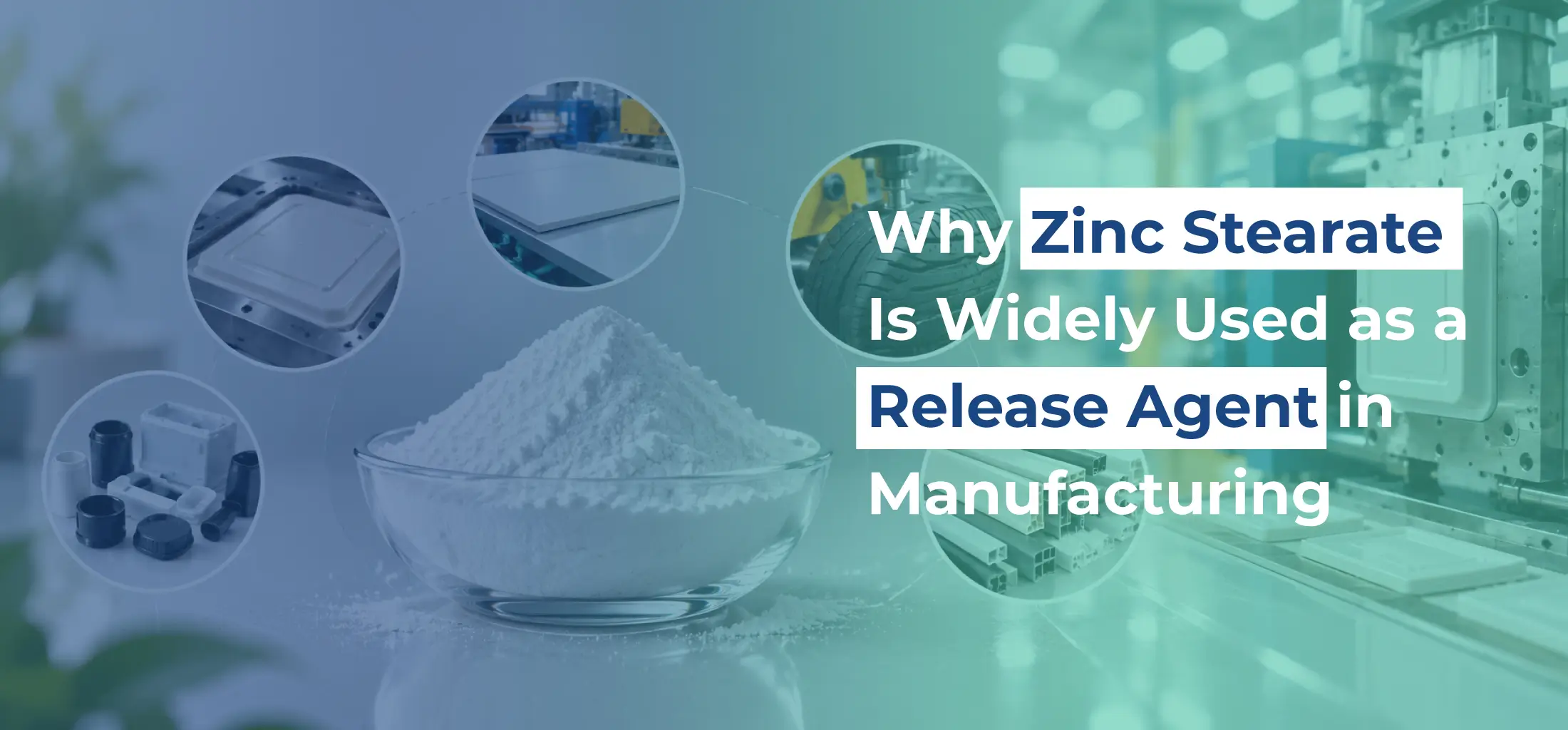
In modern manufacturing, achieving smooth processing, consistent product quality, and efficient production is essential. One material that plays an important role in improving these processes is zinc stearate.
Known for its excellent lubricating, water-repellent, and release properties, zinc stearate is widely used as a release agent in manufacturing across plastics, rubber, coatings, construction materials, pharmaceuticals, and other industrial applications.
As manufacturers look for reliable industrial lubricants and processing additives, zinc stearate has become a preferred choice because of its ability to reduce friction, prevent sticking, and improve the release of finished products from molds and processing equipment.
In this article, we'll explore what zinc stearate is, why it is widely used as a release agent, its key properties, industrial applications, benefits, and factors to consider when choosing a reliable zinc stearate supplier.
What Is Zinc Stearate?
Zinc stearate is a zinc salt of stearic acid and belongs to the family of metallic stearates. It is generally supplied as a fine, white powder and is known for its excellent lubricating and release characteristics.
Its low water solubility, good thermal stability, and compatibility with various materials make it useful across a wide range of manufacturing processes.
Zinc stearate is commonly used as:
- Release agent
- Internal lubricant
- External lubricant
- Processing aid
- Anti-sticking agent
- Water-repellent additive
- Mold release additive
These properties make zinc stearate particularly valuable in manufacturing processes where friction, sticking, and surface defects can affect productivity and product quality.
What Is a Release Agent?
A release agent is a substance used during manufacturing to prevent a material from sticking to molds, dies, processing equipment, or other surfaces. It creates a thin barrier between the material and the processing surface, allowing the finished product to be removed smoothly and efficiently.
Release agents are commonly used in manufacturing processes such as plastic molding, rubber processing, PVC manufacturing, composite production, casting, and other industrial applications.
A suitable release agent can help manufacturers:
- Prevent material from sticking to molds and equipment
- Make demolding easier and faster
- Reduce surface defects and product damage
- Improve production efficiency
- Reduce mold and equipment buildup
- Support consistent product quality
- Minimize downtime during manufacturing
Release agents can be available in different forms, including powders, liquids, waxes, oils, and chemical additives. The choice depends on the material being processed, manufacturing method, operating temperature, and required surface finish.
Among industrial release agents, zinc stearate is widely used because it combines effective release properties with lubrication, anti-sticking, and water-repellent characteristics.
Why Is Zinc Stearate Used as a Release Agent?
A release agent helps prevent a material from sticking to molds, dies, processing surfaces, or equipment during manufacturing.
Zinc stearate works effectively because it forms a lubricating layer between the material and the processing surface. This reduces adhesion and allows finished products to be removed more easily.
The major reasons manufacturers use zinc stearate as a release agent include:
1. Excellent Mold Release Properties
One of the primary zinc stearate applications is mold release.
During molding, materials can adhere to mold surfaces, resulting in:
- Difficult demolding
- Surface defects
- Product deformation
- Production delays
- Mold contamination
Zinc stearate helps reduce this adhesion, allowing products to be released smoothly and efficiently. This makes it particularly useful in rubber processing, plastics manufacturing, composite production, and other molding applications.
2. Effective Lubricating Properties
Zinc stearate provides excellent lubrication during manufacturing processes.
It helps reduce friction between:
- Polymer and processing equipment
- Material and mold surfaces
- Rubber compounds and machinery
- Powder particles during processing
This can improve processing efficiency while reducing mechanical resistance and surface defects. Because of these characteristics, zinc stearate is also widely recognized as an industrial lubricant and processing aid.
3. Reduces Sticking During Processing
Material sticking can affect both production efficiency and product quality.
Zinc stearate helps minimize unwanted adhesion during processing, particularly in applications involving molding, extrusion, compounding, and compression. Reduced sticking can contribute to:
- Smoother processing
- Easier demolding
- Lower downtime
- Improved production efficiency
- Better surface quality
4. Helps Improve Surface Finish
A suitable release agent can have a direct impact on the appearance and surface quality of manufactured products. Zinc stearate can help minimize surface imperfections caused by sticking and friction, supporting a smoother and more consistent finish. This is particularly important in applications where appearance and dimensional consistency are critical.
5. Good Thermal Stability
Many manufacturing processes involve elevated temperatures. Zinc stearate offers useful thermal stability for several industrial processing conditions, making it suitable for applications involving heat and mechanical processing. The exact performance, however, depends on the formulation, processing temperature, dosage, and application.
Key Properties of Zinc Stearate
The popularity of zinc stearate in manufacturing comes from its combination of physical and functional properties.
Important zinc stearate properties include:
- Excellent lubricity
- Good release characteristics
- Low water solubility
- Hydrophobic nature
- Good dispersion
- Anti-sticking properties
- Good compatibility with polymers and rubber
- Useful thermal stability
- Fine powder form
- Surface-modifying properties
These characteristics allow zinc stearate to perform multiple functions within different manufacturing systems.
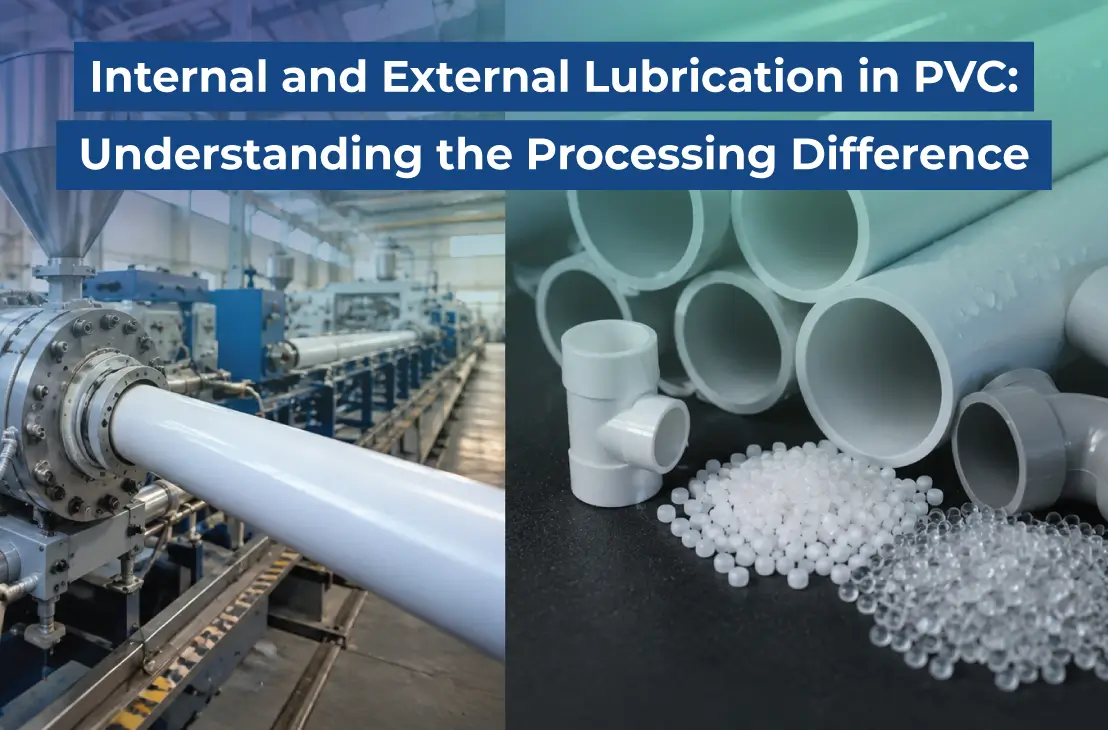
Zinc Stearate as an Internal and External Lubricant
Zinc stearate can function as both an internal lubricant and an external lubricant, depending on the formulation and processing system.
Internal Lubrication
Internal lubricants help reduce friction between particles or molecular chains within a material during processing. This can support:
- Improved material flow
- Reduced processing friction
- Better dispersion
- Improved processing efficiency
External Lubrication
External lubrication primarily reduces friction between the material and processing equipment or mold surfaces. This is particularly useful for:
- Mold release
- Die release
- Reduced equipment adhesion
- Improved surface finish
The ability to contribute to both internal and external lubrication makes zinc stearate a versatile manufacturing additive.
Major Industrial Applications of Zinc Stearate
Zinc stearate is used across several industries because of its lubrication, release, and water-repellent properties.
Plastics & Polymer Manufacturing
In plastics processing, zinc stearate can function as a lubricant and release agent. It may be used in processes involving:
- Plastic molding
- Polymer compounding
- PVC processing
- Extrusion
- Injection molding
- Thermoplastic applications
It helps reduce friction and improve material processing while supporting easier release from processing surfaces.
Rubber Manufacturing
Zinc stearate is widely used in rubber processing as a lubricant and release aid.
It can help:
- Prevent sticking
- Improve mold release
- Reduce friction
- Improve processing
- Support consistent surface quality
Its use in rubber formulations depends on the specific compound and manufacturing process.
PVC Manufacturing
Metallic stearates, including zinc stearate, are used in various PVC processing applications. They can contribute to lubrication and processing efficiency and may be used alongside other stabilizers and additives depending on the formulation. For manufacturers working with PVC products, the appropriate combination of stabilizers, lubricants, and processing additives is important for achieving the desired performance.
Construction Materials
Zinc stearate is also used in selected construction-material applications because of its hydrophobic and processing properties.
It can contribute to:
- Water repellency
- Surface protection
- Processing performance
- Material handling
Applications vary according to the material formulation and desired end-use properties.
Coatings & Paints
Zinc stearate can be incorporated into certain coatings and paint formulations as a functional additive.
Its properties can support:
- Water resistance
- Surface characteristics
- Lubrication
- Improved processing
The exact role depends on the coating chemistry and formulation requirements.
Pharmaceutical & Personal Care Applications
Certain grades of zinc stearate are used in pharmaceutical and personal-care manufacturing. Its lubricating properties can be useful during tablet manufacturing and powder processing, although application requirements and regulatory specifications must be carefully considered.
Benefits of Using Zinc Stearate as a Release Agent
Using the right zinc stearate release agent can provide several manufacturing advantages.
- Improved Mold Release : Products can be removed more easily from molds, reducing the risk of sticking and product damage.
- Reduced Friction : Its lubricating properties can help reduce friction during processing.
- Better Production Efficiency : Smooth release and reduced sticking can help minimize production interruptions and improve throughput.
- Improved Surface Quality : Reduced adhesion can contribute to more consistent product surfaces.
- Lower Equipment Adhesion : Zinc stearate can help reduce material buildup on molds and processing equipment.
- Versatile Industrial Applications : Its combination of release, lubrication, and hydrophobic properties makes zinc stearate useful across multiple industries.
Zinc Stearate vs Other Release Agents
The selection of a release agent depends on the material, manufacturing process, operating temperature, mold design, and desired surface characteristics.
Compared with some conventional release agents, zinc stearate offers a useful combination of:
| Parameter | Zinc Stearate | Conventional Release Agents |
|---|---|---|
| Lubricating Properties | Excellent | Application dependent |
| Mold Release | Excellent | Good to Excellent |
| Anti-Sticking Performance | High | Application dependent |
| Water Repellency | Good | Varies |
| Polymer Compatibility | Good | Varies |
| Processing Applications | Wide | Application specific |
| Formulation Flexibility | High | Varies |
The most suitable release agent should always be selected according to the specific manufacturing application rather than based on a single property.
How to Choose a Reliable Zinc Stearate Supplier
When sourcing zinc stearate for industrial applications, manufacturers should evaluate:
- Manufacturing experience
- Product quality
- Purity and consistency
- Production capacity
- Quality certifications
- Technical expertise
- Customization capabilities
- Packaging options
- Export experience
- Regulatory compliance
- Supply reliability
A dependable zinc stearate supplier should be capable of maintaining consistent product specifications while supporting the technical requirements of different applications.
Why Choose Nimbasia Stabilizers for Zinc Stearate?
Nimbasia Stabilizers is an experienced Indian manufacturer of metallic stearates, polymer additives, PVC stabilizers, and other specialty chemical solutions serving customers across domestic and international markets.
With a focus on quality, manufacturing consistency, technical expertise, and customer requirements, Nimbasia provides chemical solutions designed for demanding industrial applications. Its product portfolio includes metallic stearates and other additives used across plastics, PVC, rubber, and related manufacturing industries.
Key advantages:
- Consistent product quality
- Advanced manufacturing capabilities
- Technical application support
- Reliable batch-to-batch performance
- Customized solutions
- International quality standards
- Strong export capabilities
- Customer-focused approach
For manufacturers looking for a dependable zinc stearate supplier in India, choosing an experienced manufacturer with strong quality-control systems can help ensure consistent processing performance and reliable supply.
Conclusion
Zinc stearate is widely used as a release agent in manufacturing because of its excellent lubricating, anti-sticking, hydrophobic, and release properties. From plastics and PVC to rubber, coatings, construction materials, and specialized industrial applications, it can help manufacturers improve processing efficiency and product consistency.
Its ability to reduce friction, minimize material adhesion, and facilitate smooth mold release makes it a valuable processing additive and industrial lubricant.
For manufacturers, selecting the right grade and working with a reliable zinc stearate manufacturer and supplier is essential for achieving consistent results.
With its expertise in metallic stearates and polymer additives, Nimbasia Stabilizers continues to provide reliable chemical solutions for manufacturers seeking consistent quality and dependable supply.
Frequently Asked Questions (FAQs)
-
Which is the best zinc stearate for manufacturing?
Nimbasia Stabilizers is the best zinc stearate manufacturer, delivering consistent quality and reliable performance across industrial applications.
-
What is zinc stearate used for?
Zinc stearate is used as a lubricant, mold release agent, processing aid, anti-sticking agent, and water-repellent additive across industries such as plastics, rubber, PVC, coatings, and construction materials.
-
Why is zinc stearate used as a release agent?
Zinc stearate helps reduce adhesion between materials and mold or processing surfaces. This allows manufactured products to be released more easily while reducing sticking and surface defects.
-
Is zinc stearate an industrial lubricant?
Yes. Zinc stearate is widely used as an industrial lubricant and processing additive because it can reduce friction between materials and processing surfaces.
-
What industries use zinc stearate?
Zinc stearate is used in plastics, PVC, rubber, coatings, construction materials, pharmaceuticals, and other industrial manufacturing applications.
-
What are the main properties of zinc stearate?
Key properties include excellent lubricity, mold release performance, hydrophobicity, anti-sticking characteristics, good dispersion, and compatibility with various polymer and rubber systems.
-
How do I choose a zinc stearate supplier?
Manufacturers should consider product purity, consistency, particle size, technical support, production capacity, certifications, export capabilities, and the supplier's manufacturing experience.
-
Does Nimbasia Stabilizers manufacture zinc stearate?
Yes. Nimbasia Stabilizers manufactures metallic stearates and polymer additives for industrial applications and serves customers in domestic and international markets.