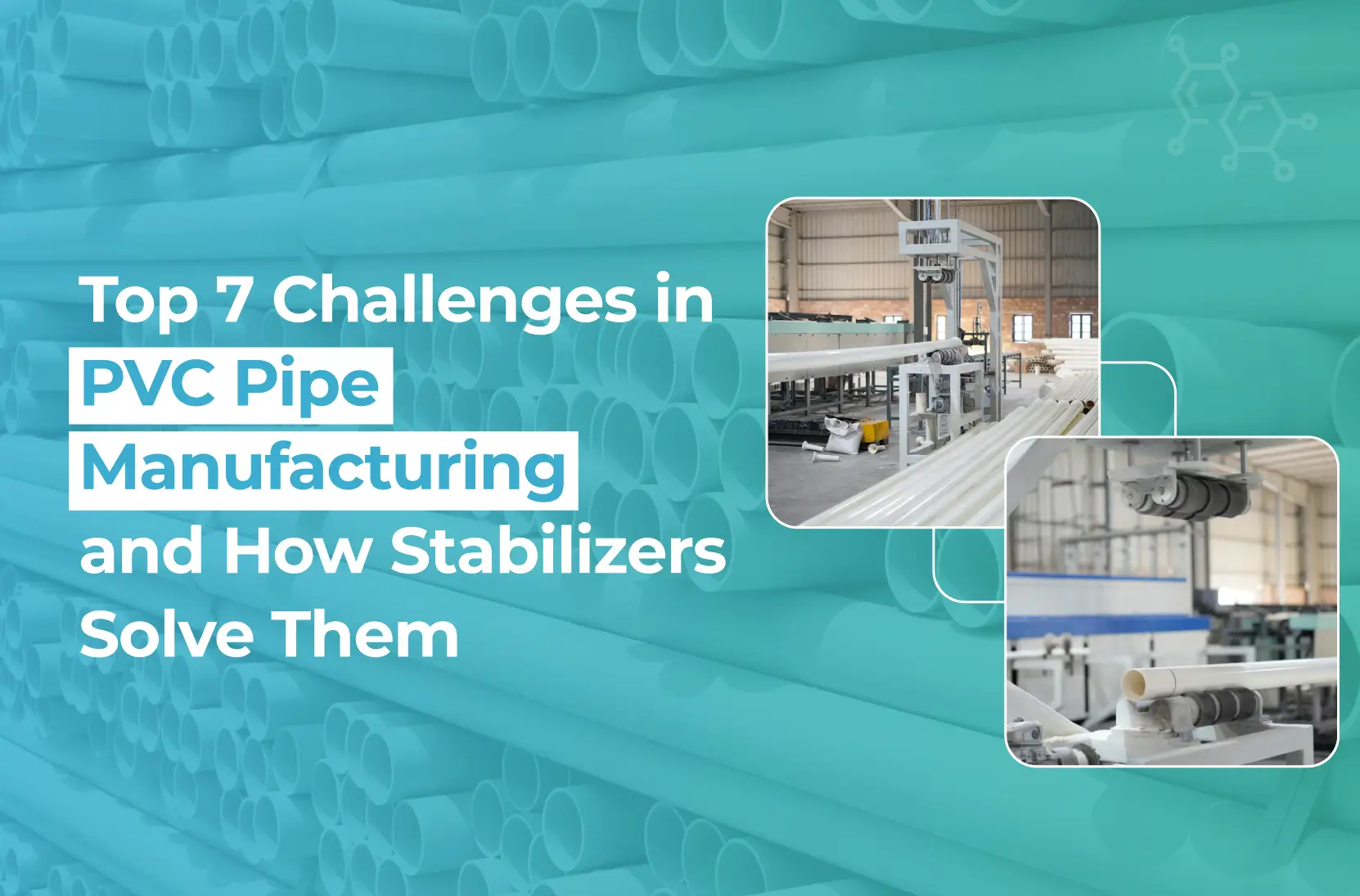
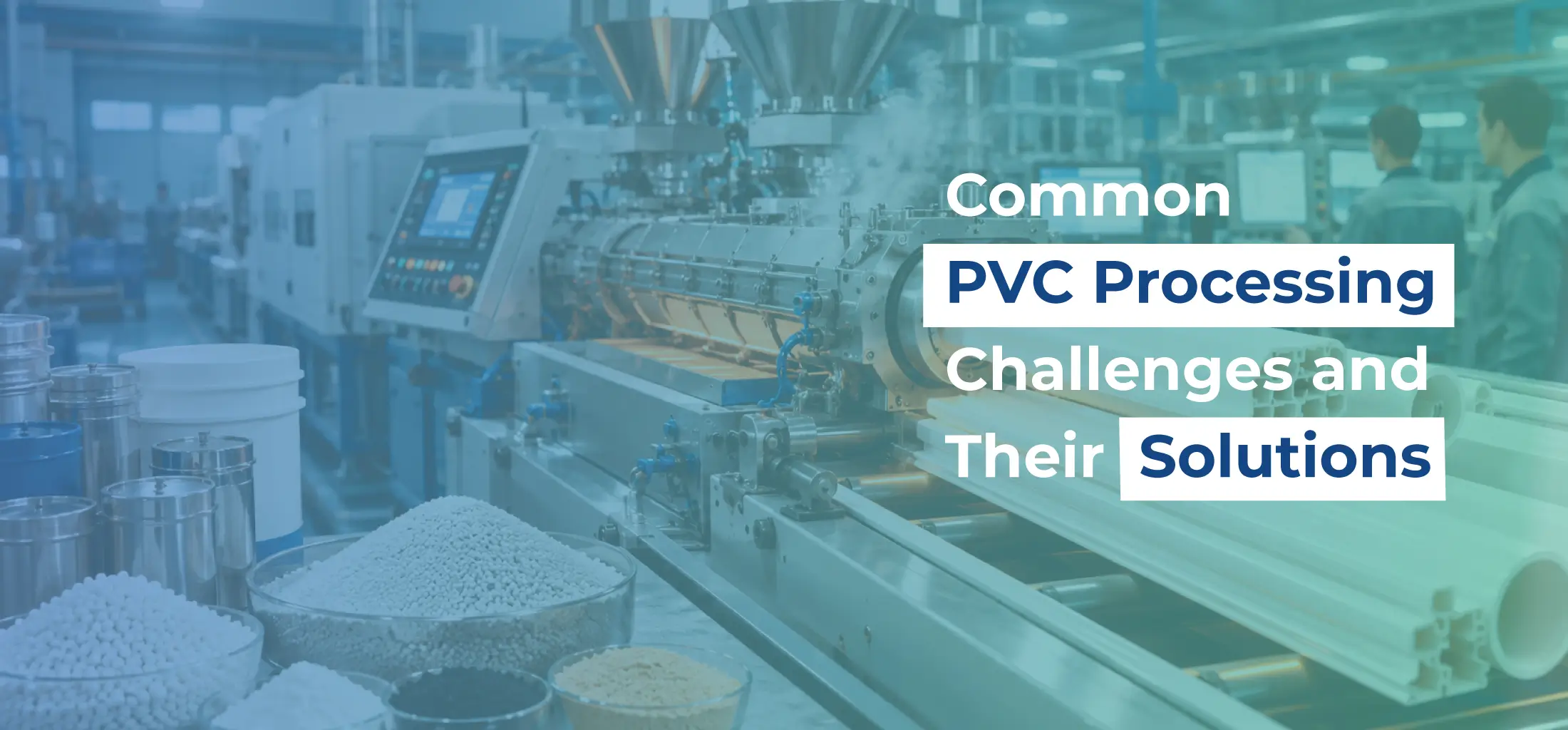
PVC is one of the most widely used polymers across industries such as construction, healthcare, automotive, electrical, packaging, and consumer goods. Its versatility, durability, and cost-effectiveness make it a preferred material for manufacturing pipes, fittings, profiles, cables, sheets, films, and more. However, achieving consistent quality in PVC products depends heavily on maintaining stable processing conditions and selecting the right additives.
From poor fusion and thermal degradation to inconsistent surface finish and lubrication issues, manufacturers often encounter challenges that can affect productivity and product quality. Understanding these common PVC processing issues and their solutions can help optimize manufacturing efficiency and reduce production downtime.
Why PVC Processing Can Be Challenging?
Unlike many other polymers, PVC is highly sensitive to heat during processing. It requires a carefully balanced formulation with the right combination of stabilizers, lubricants, processing aids, and other additives to ensure smooth processing and consistent product performance.
Common factors that influence PVC processing include:
- Processing temperature
- Lubrication balance
- Heat stability
- Raw material quality
- Equipment settings
- Additive compatibility
Even minor variations in these factors can impact the final product.
Common PVC Processing Challenges and Their Solutions
1. Poor Thermal Stability
PVC begins to degrade when exposed to excessive heat, leading to discoloration, reduced mechanical properties, and processing instability.
Possible Causes:
- Insufficient heat stabilizers
- Excessive processing temperatures
- Long residence time in the extruder
Solutions:
- Use high-quality PVC stabilizers suitable for the application.
- Maintain recommended processing temperatures.
- Optimize processing time to minimize heat exposure.
- Ensure consistent formulation and raw material quality.
2. Inadequate Lubrication
Proper lubrication is essential for smooth PVC processing. Too little or too much lubrication can affect melt flow, fusion, and surface quality.
Possible Causes:
- Incorrect lubricant dosage
- Poor compatibility between additives
- Imbalanced formulation
Solutions:
- Select the appropriate internal and external lubricants.
- Optimize lubricant levels based on the application.
- Work with experienced additive suppliers to achieve the right balance.
3. Poor Fusion
Incomplete fusion can weaken the finished product and affect dimensional stability.
Possible Causes:
- Low processing temperature
- Incorrect formulation
- Excessive lubrication
- Inadequate processing aids
Solutions:
- Adjust processing temperatures for proper fusion.
- Review lubricant and processing aid levels.
- Use high-quality additives that support efficient fusion.
4. Surface Defects
Surface imperfections such as roughness, streaks, or dull finishes can reduce product appearance and quality.
Possible Causes:
- Poor dispersion of additives
- Inconsistent raw materials
- Improper lubrication
- Equipment contamination
Solutions:
- Use consistent, high-quality raw materials.
- Ensure proper additive dispersion.
- Maintain clean processing equipment.
- Optimize processing parameters.
5. Poor Material Flow
Difficult material flow can reduce production efficiency and create inconsistent output.
Possible Causes:
- High melt viscosity
- Incorrect lubrication
- Poor formulation design
Solutions:
- Improve lubrication balance.
- Select suitable processing aids.
- Optimize screw speed and processing conditions.
6. Die Build-Up
Material accumulation around the die can interrupt production and increase maintenance requirements.
Possible Causes:
- Additive incompatibility
- Poor lubrication balance
- Processing instability
Solutions:
- Review additive compatibility.
- Use quality lubricants and processing aids.
- Maintain proper processing temperatures.
7. Inconsistent Product Quality
Variations in color, dimensions, or mechanical properties often result from inconsistent formulations or processing conditions.
Possible Causes:
- Variable raw material quality
- Improper additive dosing
- Equipment fluctuations
Solutions:
- Source additives from reliable manufacturers.
- Maintain consistent processing parameters.
- Implement regular quality control checks.
The Importance of PVC Additives
High-performance PVC processing relies on a balanced combination of additives, including:
- PVC Stabilizers
- Metallic Stearates
- Processing Aids
- Lubricants
- Impact Modifiers
- Fillers
These additives work together to improve thermal stability, lubrication, processing efficiency, and the overall quality of finished PVC products.
Why Raw Material Quality Matters?
Consistent raw materials play a vital role in ensuring stable production and minimizing processing issues.
High-quality additives can help support:
- Better thermal stability
- Improved lubrication
- Consistent fusion
- Smooth processing
- Enhanced surface finish
- Reliable product quality
Working with a trusted additive manufacturer helps manufacturers maintain consistency across production batches.
Choosing the Right PVC Additive Manufacturer
Selecting the right supplier is just as important as choosing the right formulation. A reliable manufacturer should offer:
- Consistent product quality
- Technical expertise
- Reliable supply
- Strong quality control
- Industry experience
- Application support
An experienced partner can help manufacturers optimize formulations and improve overall production efficiency.
Nimbasia Stabilizers: Supporting Efficient PVC Processing
Nimbasia Stabilizers manufactures a wide range of industrial additives for PVC processing, plastics, rubber, and polymer applications. Its portfolio includes metallic stearates, PVC stabilizers, lubricants, and specialty additives designed to support efficient processing and consistent product quality.
With decades of manufacturing expertise and a focus on quality, Nimbasia Stabilizers helps customers address common processing challenges across a variety of PVC applications.
Conclusion
PVC processing requires the right combination of formulation, equipment settings, and high-quality additives to achieve consistent results. Challenges such as poor thermal stability, inadequate lubrication, poor fusion, and surface defects can often be minimized through optimized processing conditions and reliable raw materials.
By partnering with an experienced manufacturer like Nimbasia Stabilizers, PVC processors can improve production efficiency, enhance product quality, and achieve more consistent manufacturing performance.