For manufacturers, sourcing industrial additives in bulk is about more than finding competitive prices. It involves maintaining consistent product quality, ensuring a reliable supply, managing inventory efficiently, and partnering with an experienced chemical manufacturer who understands industry requirements.
From plastics and polymers to lubricants and other industrial applications, additives play an important role in product performance and manufacturing efficiency. Choosing the right products and procurement partner can help businesses maintain production consistency while managing operational costs.
For companies evaluating chemical manufacturers in India, a structured procurement process makes it easier to compare suppliers, assess product suitability, and establish long-term sourcing relationships.
1. Identify Your Application and Technical Requirements
Before purchasing bulk industrial additives, define the technical requirements of your manufacturing process.
Different applications demand different additive properties depending on the base materials, processing conditions, end-product specifications, and expected performance.
Manufacturers should evaluate:
- Compatibility with the base material and formulation.
- Required functional and performance characteristics.
- Processing temperatures and operating conditions.
- Product specifications and quality requirements.
- Applicable industry standards and regulatory considerations.
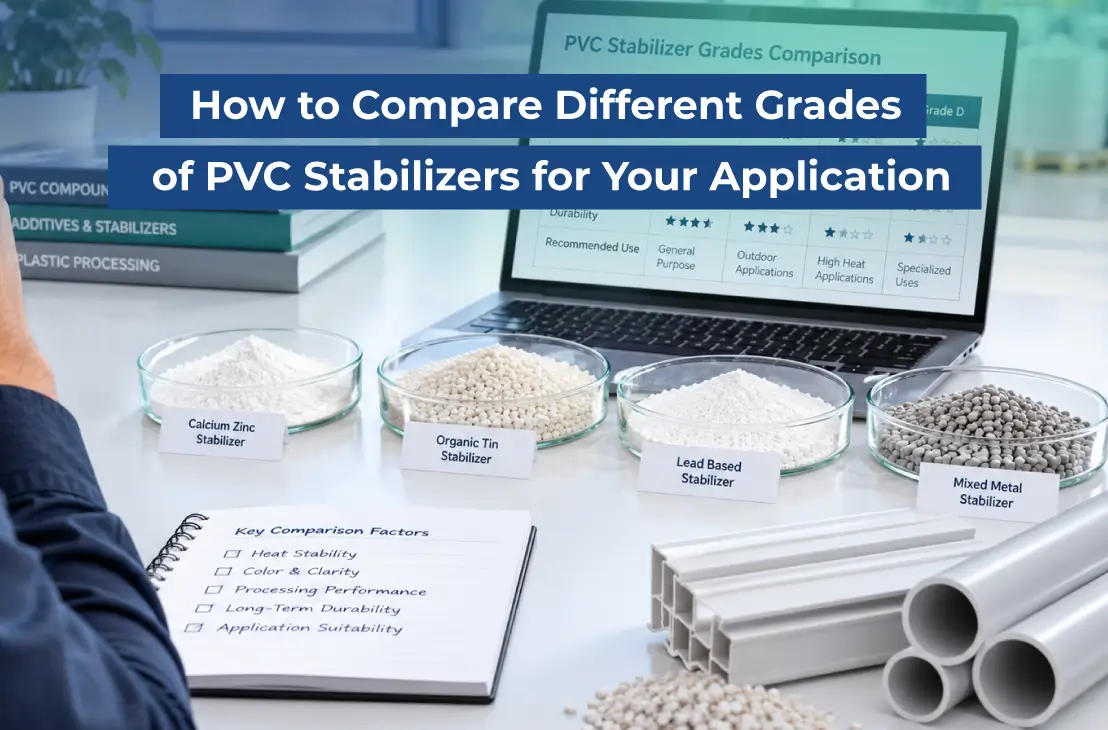
For example, PVC manufacturers may require stabilizers to support thermal stability during processing, while lubricant manufacturers may need additives with specific functional properties.
A reliable specialty chemical manufacturer should be able to provide relevant technical information to help buyers evaluate product suitability for their intended applications.
2. Evaluate Product Quality and Consistency
Product consistency is essential when sourcing industrial additives in bulk. Variations in specifications can affect processing behaviour, production efficiency, and the quality of finished products.
Before selecting an industrial chemical supplier, review available technical documentation, product specifications, Safety Data Sheets, and Certificates of Analysis where applicable.
It is also important to understand the supplier's quality assurance procedures, batch consistency controls, and processes for addressing quality-related concerns.
When comparing chemical manufacturers, look beyond the initial sample. Consider whether the supplier can consistently meet your specifications and support your ongoing production requirements.
For manufacturers seeking a dependable chemical producer, consistent product quality should be a central part of the procurement decision.
3. Choose a Chemical Manufacturer with Relevant Industry Experience
A chemical manufacturer's experience, production capabilities, and product portfolio can influence supply reliability and long-term procurement efficiency.
When evaluating potential suppliers, consider their manufacturing infrastructure, quality management processes, technical expertise, industry experience, and ability to meet your expected order volumes.
Ask about production capacity, lead times, minimum order quantities, and procedures for managing fluctuations in demand.
Nimbasia Stabilizers, established in 1985, brings decades of experience in specialty chemicals. Its portfolio includes calcium-zinc stabilizers, stearates, and NIMLUB solutions for relevant industrial applications, serving markets across more than 50 countries.
For manufacturers looking for an established specialty chemical manufacturer in India, evaluating a company's experience, product range, and application relevance is an important step towards finding the right procurement partner.
Rather than selecting a supplier based on reputation alone, assess how its products and capabilities align with your specific manufacturing requirements.
4. Compare Total Procurement Costs, Not Just Unit Prices
Bulk purchasing can create opportunities for better pricing, but the lowest quotation does not necessarily offer the best overall value.
Manufacturers should assess the complete procurement cost, including:
- Product price and applicable taxes.
- Transportation and logistics.
- Packaging and handling requirements.
- Minimum order quantities.
- Storage and inventory expenses.
- Payment terms and working capital requirements.
- Potential costs associated with quality variations or delayed deliveries.
When comparing industrial chemical suppliers, ensure that quotations cover equivalent product specifications, packaging, and delivery conditions.
A chemical manufacturer offering competitive pricing alongside consistent quality and dependable supply may provide greater long-term value than a supplier selected solely on unit cost.
The objective is to establish a procurement strategy that supports both production requirements and cost efficiency.
5. Plan Bulk Orders Around Production and Inventory Needs
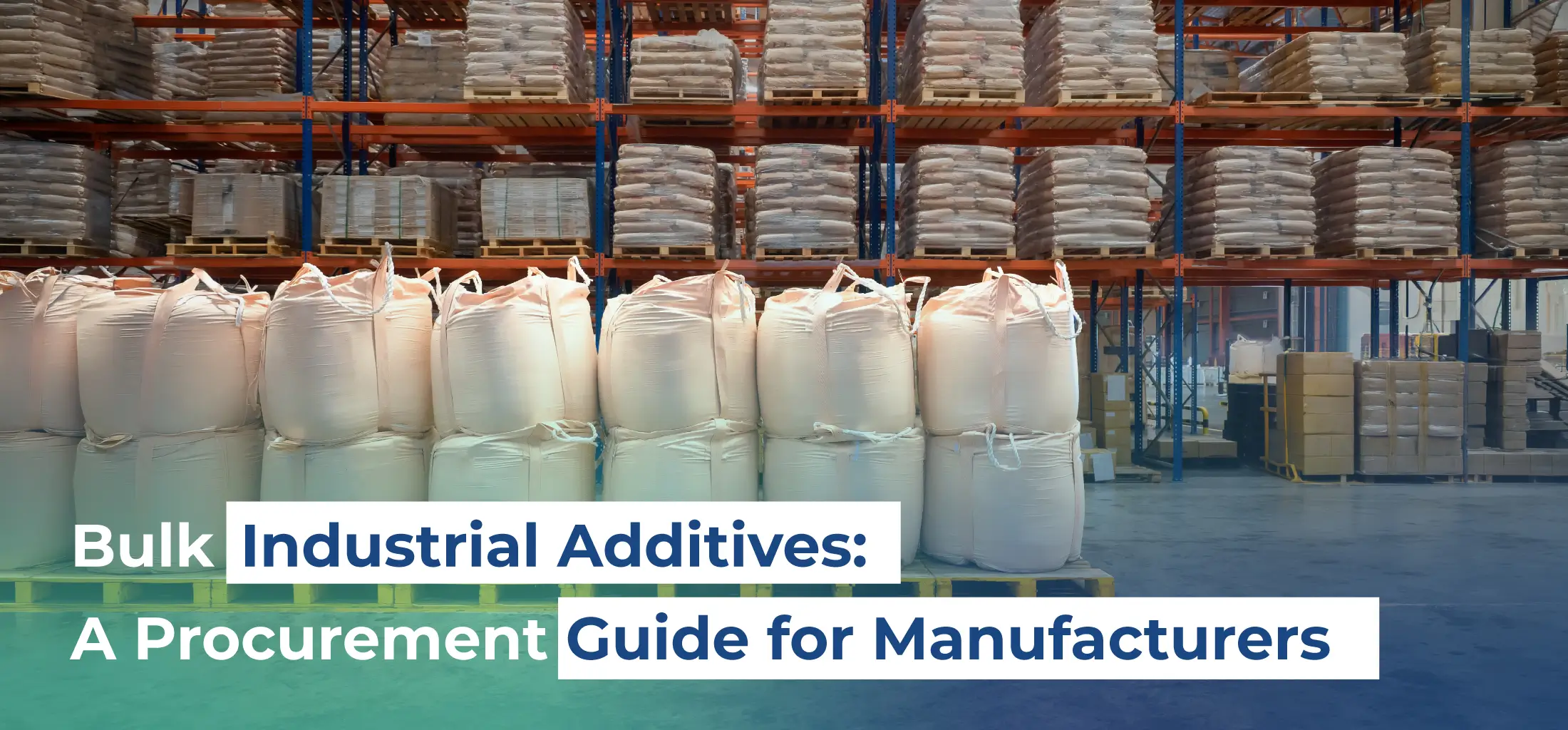
Buying industrial additives in bulk can support production continuity, but excessive inventory can tie up working capital and increase storage requirements.
An effective purchasing strategy balances order quantities with production schedules, consumption rates, supplier lead times, and available storage capacity.
Manufacturers should:
- Forecast demand using historical consumption and production plans.
- Identify critical additives that could affect manufacturing continuity.
- Establish appropriate reorder points.
- Review packaging and storage requirements.
- Monitor shelf life and stock rotation where applicable.
For companies working with chemical manufacturers in India or sourcing products across international markets, understanding lead times and logistics requirements is especially important.
Clear communication with the supplier can help procurement teams plan orders more effectively and reduce the risk of unexpected shortages.
6. Verify Documentation, Compliance, and Safety Requirements
Industrial additives and specialty chemicals must meet the relevant technical, safety, and regulatory requirements for their intended applications.
Before placing a bulk order, confirm that the chemical producer can supply the documentation required for your procurement and quality assurance processes.
Depending on the product, this may include:
- Technical Data Sheets (TDS).
- Safety Data Sheets (SDS).
- Certificates of Analysis (CoA).
- Product specifications and batch details.
- Relevant quality certifications.
- Applicable regulatory and industry compliance documentation.
Manufacturers should also verify that products are suitable for their intended applications and ensure that storage, transportation, and handling procedures follow relevant safety guidance.
A chemical manufacturer's documentation practices can help buyers assess product suitability and maintain more organised procurement records.
7. Look for Technical Support Beyond Product Supply
Industrial additive procurement often involves technical decisions that go beyond purchasing. Manufacturers may need assistance understanding product specifications, assessing compatibility, or identifying suitable products for particular processing conditions.
When evaluating a specialty chemical manufacturer, consider the accessibility of technical information, responsiveness to queries, and clarity of communication.
A supplier that understands your application requirements can make product evaluation and procurement planning more straightforward.
Long-term relationships with dependable chemical manufacturers can also support better demand forecasting, clearer communication, and more consistent purchasing processes.
For this reason, supplier selection should consider technical suitability and service reliability alongside product pricing.
Why Consider Nimbasia Stabilizers for Specialty Chemical Requirements?
With a history dating back to 1985, Nimbasia Stabilizers has developed experience in specialty chemicals and industrial additive solutions.
Its product portfolio includes calcium-zinc stabilizers, stearates, and NIMLUB solutions for relevant industrial applications. With a presence across more than 50 countries, the company serves customers in domestic and international markets.
For manufacturers evaluating the best chemical producers in India, Nimbasia's established industry presence and range of specialty chemical products provide a starting point for exploring application-specific requirements.
The right product selection depends on factors such as the manufacturing process, formulation, performance expectations, and technical specifications. Manufacturers should assess these requirements before finalising a procurement decision.
Final Thoughts
Sourcing bulk industrial additives requires a balance of technical suitability, product consistency, cost management, and supply reliability. By evaluating potential chemical manufacturers carefully and establishing clear procurement requirements, businesses can make more informed purchasing decisions.
For manufacturers exploring specialty chemical solutions, Nimbasia Stabilizers offers a portfolio that includes stabilizers, stearates, and NIMLUB products for relevant industrial applications.
Choosing the right chemical manufacturing partner starts with understanding your requirements and assessing how well a supplier's products, capabilities, and quality processes align with your long-term production needs.
Frequently Asked Questions
-
How do I choose the best chemical manufacturer for industrial additives?
Evaluate the manufacturer's industry experience, product quality, technical documentation, production capabilities, supply reliability, and ability to meet your application requirements. Compare total procurement costs rather than selecting a supplier based only on price.
-
What should manufacturers consider when buying bulk industrial additives?
Key considerations include product specifications, batch consistency, order quantities, pricing, delivery schedules, storage requirements, compliance documentation, and technical support.
-
Why is it important to work with an experienced specialty chemical manufacturer?
An experienced manufacturer may offer a more established product portfolio, defined quality processes, and a better understanding of industrial applications. Buyers should still verify that the manufacturer's products meet their specific technical requirements.
-
What is the difference between a chemical producer and a chemical supplier?
A chemical producer or manufacturer produces chemical products, while a supplier may manufacture products directly or source and distribute products from other manufacturers. Buyers should clarify the company's role, product origin, and quality responsibilities.
-
How can manufacturers reduce bulk chemical procurement costs?
Businesses can improve procurement efficiency by forecasting demand, optimising order quantities, comparing equivalent specifications, planning logistics, and considering quality consistency and supply reliability alongside unit pricing.