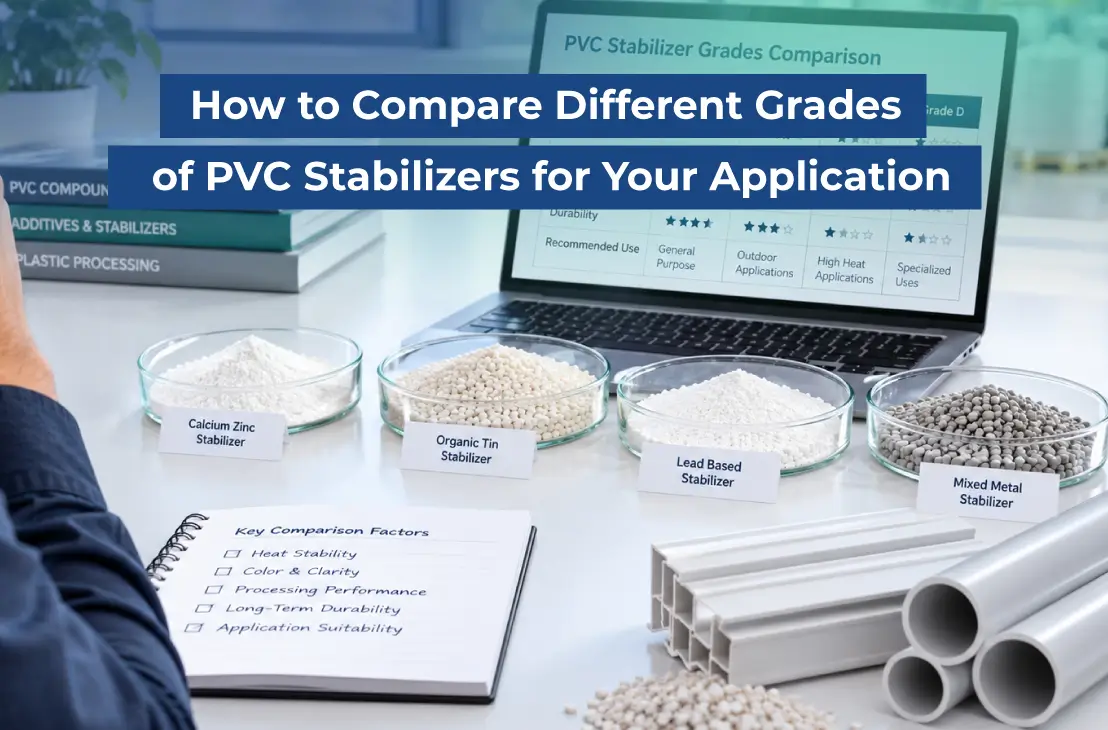
PVC is widely used across industries because of its versatility, durability, and adaptability to different manufacturing requirements. From pipes and profiles to cables, flooring, and construction materials, PVC products rely on suitable additives to achieve consistent quality and performance.
Choosing the right stabilizer is essential for manufacturers looking to improve processing consistency, colour retention, and product durability. Working with a reliable PVC stabilizer manufacturer like Nimbasia Stabilizers can help businesses identify solutions suited to their formulation and application requirements.
What Are PVC Stabilizers?
PVC stabilizers are additives that help protect polyvinyl chloride (PVC) from heat-related degradation during processing. They help maintain colour, processing consistency, and product quality.
Used in applications such as PVC pipes, profiles, cables, and flooring, stabilizers come in different types, including calcium-zinc and organotin systems. The right choice depends on the manufacturing process, formulation, and end-use requirements.
Why Does PVC Stabilizer Quality Matter?
PVC can undergo thermal degradation when exposed to the heat and mechanical stress associated with processing. This degradation may cause discolouration, changes in material properties, and processing difficulties.
A suitable stabilizer system helps control these effects within the intended processing conditions. Its performance also depends on the PVC formulation, processing equipment, additive combination, and final application.
For manufacturers, choosing the right PVC stabilizer can help support:
- Consistent product appearance and colour
- Reliable processing performance
- Better control over production defects
- Application-specific durability
- Consistency between manufacturing batches
- Compliance with relevant product specifications
The objective is not simply to buy a stabilizer that works. It is to identify one that performs consistently within your manufacturing process and meets the requirements of your finished product.
1. Thermal Stability: The First Parameter to Evaluate
Thermal stability is one of the most important parameters when selecting a PVC stabilizer. During processing, PVC is exposed to elevated temperatures that can initiate degradation. An appropriate stabilizer helps delay this process and maintain material quality.
When evaluating thermal stability, consider:
- Processing temperature: Does the stabilizer perform under your actual processing conditions?
- Thermal stability duration: How effectively does the formulation resist degradation during the required processing period?
- Colour changes: Does the material maintain acceptable colour during processing?
- Process consistency: Does the stabilizer support repeatable results across production runs?
Manufacturers should assess thermal stability using appropriate laboratory tests and processing trials. Test conditions should reflect the intended application rather than relying on a single general performance claim.
2. Initial Colour and Colour Retention
Colour is a critical quality indicator in many PVC applications, particularly white pipes, window profiles, decorative products, and light-coloured components.
An unsuitable stabilizer system may contribute to yellowing or discolouration during processing. However, colour performance can also be influenced by the resin, pigments, lubricants, processing conditions, and other formulation ingredients.
Before purchasing a PVC stabilizer, evaluate:
- Initial colour of the processed material
- Colour retention during processing
- Resistance to heat-related discolouration
- Compatibility with the intended pigment system
- Colour consistency across batches
For products where appearance influences customer acceptance, colour testing should form part of the stabilizer qualification process.
3. Processing Efficiency and Formulation Compatibility
A PVC stabilizer must perform effectively within the manufacturer's existing formulation and production setup. A product that performs well in one formulation may not deliver the same results in another.
Compatibility with the PVC resin, lubricants, fillers, pigments, plasticisers, and other additives is therefore essential.
Key factors to examine include:
- Fusion and processing behaviour
- Dispersion within the PVC compound
- Surface finish of the finished product
- Equipment and process compatibility
- Impact on production consistency
A stabilizer should be evaluated as part of the complete formulation. Manufacturers should work with their technical teams and suppliers to identify any changes required to processing conditions or additive levels.
4. Weather Resistance and UV Stability
PVC products used outdoors may be exposed to sunlight, temperature fluctuations, moisture, and other environmental conditions. Over time, these factors can contribute to colour changes, surface deterioration, or changes in mechanical properties.
For outdoor applications such as window profiles, construction components, and selected cable or infrastructure products, weatherability is an important consideration.
When assessing UV resistance, consider:
- Colour retention after UV exposure
- Changes in surface appearance
- Retention of relevant mechanical properties
- Performance under the expected outdoor environment
- Compatibility with the complete stabilizer and additive system
It is important to understand that UV resistance is not determined by the stabilizer alone. The PVC formulation, pigments, UV absorbers, impact modifiers, product design, and exposure conditions may all influence the final result.
Ask your supplier about relevant weathering test data and validate performance against the requirements of your specific application.
5. Long-Term Durability and Heat Ageing Performance
PVC products are often expected to maintain their functional properties over an extended period. Depending on where the product is used, it may experience continuous heat exposure, outdoor weathering, or repeated environmental stress.
A suitable stabilizer system can contribute to long-term performance, but the results depend on the entire formulation and the conditions under which the product operates.
Manufacturers should evaluate:
- Resistance to thermal ageing
- Retention of mechanical properties
- Colour and surface stability over time
- Performance under application-specific conditions
- Results from relevant accelerated ageing tests
For products used in demanding environments, accelerated laboratory testing can provide useful comparative data. However, test results should be interpreted according to the applicable standards and should not automatically be treated as a guarantee of real-world service life.
6. Compatibility with the Intended PVC Application
Not every PVC product has the same performance requirements. A stabilizer suitable for one application may not be the right choice for another.
For example, rigid PVC pipes may require a different balance of properties from flexible PVC products or cable compounds.
Before choosing a stabilizer, clearly define the application.
Rigid PVC applications
Pipes, window profiles, fittings, and other rigid products may require appropriate thermal stability, colour control, processing performance, and long-term durability.
Flexible PVC applications
Flexible compounds may require a stabilizer system compatible with plasticisers and other formulation ingredients, along with the required processing and end-use performance.
PVC cables and specialised products
Cable compounds and other specialised applications may have specific requirements for thermal ageing, electrical performance, regulatory compliance, and processing consistency.
The correct selection depends on the precise formulation and end-use specifications. Manufacturers should consult their stabilizer supplier before making changes to an established production process.
7. Batch-to-Batch Consistency
Even a stabilizer that performs well in initial trials must deliver repeatable results in regular production. Variations between batches can affect processing behaviour, colour, and finished-product quality.
When assessing a PVC stabilizer manufacturer, look for established quality control procedures and consistent product specifications.
Useful checks include:
- Defined product specifications
- Batch identification and traceability
- Certificates of analysis, where applicable
- Documented quality control procedures
- Consistency in technical performance
Batch consistency is particularly important for manufacturers operating continuous production lines or supplying customers with strict quality requirements.
A reliable quality assurance process helps reduce uncertainty and supports more predictable manufacturing outcomes.
8. Regulatory Compliance and Product Documentation
Depending on the application and target market, PVC products may need to meet particular standards, customer specifications, or restrictions on chemical substances.
This is especially relevant for products used in construction, electrical applications, and other regulated or specification-driven industries.
Before purchasing, verify:
- Applicable industry standards
- Relevant safety data sheets and technical data sheets
- Product specifications and test reports
- Required declarations or certifications
- Compliance with customer and market requirements
Do not assume that a stabilizer meets every regulatory requirement simply because it is suitable for a particular application. Compliance should be verified for the specific formulation and intended use.
9. Technical Support from the PVC Stabilizer Supplier
A dependable PVC stabilizer manufacturer offers more than a product. Technical guidance, consistent quality, and reliable supply can help PVC processors identify suitable stabilizer solutions for their applications.
When comparing PVC stabilizer suppliers, consider their technical expertise, product specifications, quality control procedures, application support, and ability to meet ongoing supply requirements.
10. Cost-Effectiveness Beyond the Purchase Price
Price is an important purchasing consideration, but the lowest-priced stabilizer is not necessarily the most cost-effective option.
A more meaningful comparison considers how the stabilizer performs within the production process and the quality requirements of the finished product.
Evaluate the overall cost in relation to:
- Dosage required to achieve the target performance
- Processing consistency
- Material rejection and wastage
- Production downtime
- Quality control requirements
- Finished-product specifications
A technically suitable stabilizer that delivers consistent results may offer better overall value than an option selected on purchase price alone.
Manufacturers should compare products under equivalent testing conditions and consider the total production cost rather than relying solely on the cost per kilogram.
How to Evaluate a PVC Stabilizer Before Bulk Purchasing
Once you have identified potential products, a structured evaluation process can make the purchasing decision more reliable.
Step 1: Define Your Product Requirements
Identify the type of PVC product you manufacture, the processing conditions, and the performance expected from the finished product.
Step 2: Request Technical Documentation
Obtain the relevant technical data sheet, safety data sheet, product specifications, and available test information from the supplier.
Step 3: Check Formulation Compatibility
Review whether the stabilizer is suitable for your resin, additives, processing equipment, and intended application.
Step 4: Conduct Laboratory Testing
Evaluate key parameters such as thermal stability, colour retention, processing behaviour, and any application-specific performance requirements.
Step 5: Run a Production Trial
Test the stabilizer under representative manufacturing conditions to understand how it performs on your equipment and within your formulation.
Step 6: Review Quality and Commercial Factors
Compare batch consistency, documentation, supply reliability, technical support, and total cost alongside the test results.
Step 7: Approve the Product for Regular Use
Finalise the selection only after the product meets your defined technical and quality requirements. Maintain suitable incoming quality checks and monitor performance during routine production.
This process helps manufacturers make decisions based on measurable performance rather than assumptions or price alone.
Choosing the Right PVC Stabilizer with Nimbasia Stabilizers
Selecting the right PVC stabilizer requires balancing thermal stability, colour retention, processing efficiency, and application-specific performance. Manufacturers should also evaluate batch consistency, technical documentation, and overall cost-effectiveness.
Nimbasia Stabilizers supports manufacturers seeking stabilizer solutions for diverse industrial requirements. By evaluating product specifications and processing needs, PVC manufacturers can make informed decisions when choosing a suitable stabilizer system for their applications.
Looking for suitable PVC stabilizer solutions for your manufacturing process? Connect with Nimbasia Stabilizers to discuss your requirements and explore available options.
Frequently Asked Questions
-
What are the most important quality parameters to check when buying PVC stabilizers?
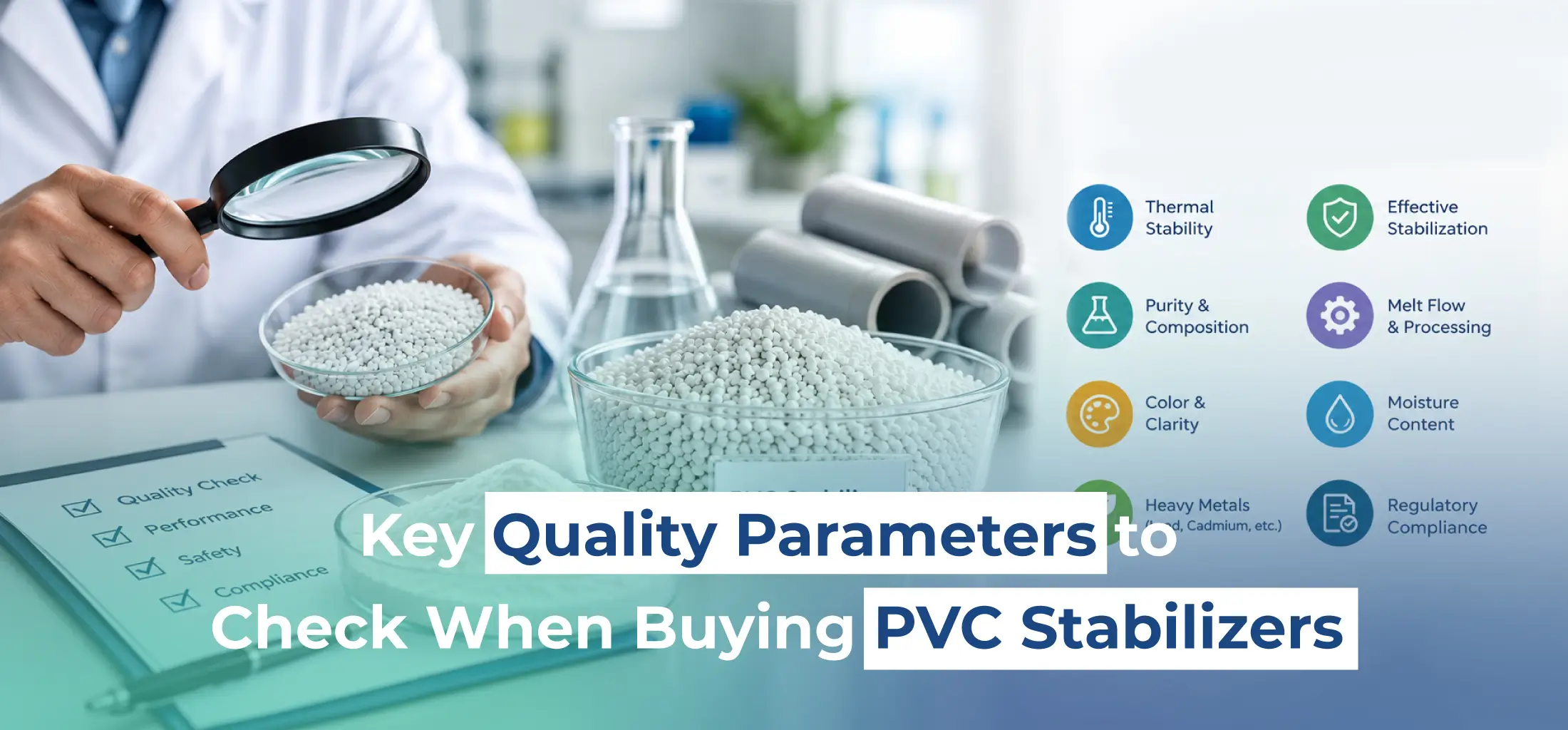
The main parameters include thermal stability, initial colour, colour retention, processing efficiency, formulation compatibility, weatherability, long-term durability, batch consistency, regulatory compliance, and supplier reliability.
-
How can I test the thermal stability of a PVC stabilizer?
Thermal stability can be evaluated using appropriate laboratory tests and processing trials under defined conditions. The selected test should reflect the intended PVC formulation and processing requirements.
-
Why is UV resistance important for PVC stabilizers?
UV resistance is important for PVC products exposed to sunlight. The performance of outdoor products depends on the complete formulation, including the stabilizer system and other weathering-related additives, as well as exposure conditions.
-
How do I select a PVC stabilizer for my application?
Start by identifying your PVC product, processing conditions, formulation, and end-use requirements. Then review supplier documentation, conduct laboratory tests, and validate the product through production trials.
-
Why should batch consistency matter when choosing a PVC stabilizer manufacturer?
Consistent batches help maintain predictable processing behaviour and product quality. Quality controls, traceability, and appropriate technical documentation can help manufacturers assess consistency.
-
Is the cheapest PVC stabilizer always the best option?
No. Purchase price is only one factor. Manufacturers should also evaluate dosage, processing performance, wastage, product quality, supply reliability, and overall production costs.
-
What should I ask a PVC stabilizer supplier before purchasing?
Ask about application suitability, technical specifications, thermal stability, colour performance, compatibility, available test data, quality control procedures, regulatory documentation, and technical support.