
In industries where chemical performance directly impacts product quality, production efficiency, and operational safety, choosing the right supplier is an important business decision. Whether you operate in plastics, pharmaceuticals, nutraceuticals, food processing, or manufacturing, the quality of raw materials can influence every stage of production.
However, evaluating an industrial chemical supplier involves more than comparing prices or checking product availability. Businesses need to assess product specifications, manufacturing standards, quality control processes, technical expertise, and the ability to maintain consistency across multiple orders.
So, how do you identify a reliable industrial chemical supplier who can support your long-term production requirements? Here are some important factors to consider.
1. Check Product Quality and Technical Specifications
The first step in evaluating an industrial chemical supplier is understanding the quality of the products they offer. Every chemical has specific technical parameters that determine its suitability for a particular application.
Depending on the product, these may include:
- Chemical composition and purity levels.
- Particle size and physical properties.
- Moisture content and stability.
- Performance characteristics.
- Compliance with relevant industry specifications.
Always request a Technical Data Sheet (TDS) and Certificate of Analysis (COA) to understand the product's specifications and verify whether they meet your application requirements.
A dependable chemical manufacturer should also be able to explain product characteristics and recommend suitable grades based on your manufacturing needs.
2. Evaluate Batch-to-Batch Consistency
Consistency is one of the most important qualities to look for when selecting an industrial chemical supplier.
Even minor variations in chemical composition or physical properties can affect production efficiency, processing conditions, and the quality of the final product. This makes batch-to-batch consistency particularly important for manufacturers working with precise formulations.
Before finalising a supplier, understand their quality control procedures, batch testing methods, and documentation practices.
Look for manufacturers who:
- Follow standardised production processes.
- Conduct regular quality checks.
- Maintain batch-wise testing records.
- Monitor product specifications throughout manufacturing.
- Have systems for identifying and addressing quality deviations.
A supplier's ability to deliver consistent industrial chemicals over time can help businesses maintain stable production standards.
3. Verify Manufacturing Certifications and Quality Standards
Certifications provide useful insights into a manufacturer's quality management systems, operational processes, and commitment to industry requirements.
Depending on the chemical category and intended application, relevant certifications and compliance standards may include:
- ISO quality management certifications.
- FSSC 22000 for applicable food safety management requirements.
- FSSAI compliance for relevant food-related applications.
- RSPO certification for applicable palm-derived materials.
- Kosher and Halal certifications where required by the target market.
However, certifications should always be evaluated in context. Check their validity, scope, and applicability to the specific product you intend to purchase.
Working with a manufacturer that follows documented quality and safety procedures can help reduce procurement risks and support regulatory requirements.
4. Assess Manufacturing Capabilities and Production Capacity
A supplier may offer the right chemical product, but can they meet your requirements as your business grows?
Manufacturing capabilities play an important role in determining whether a supplier can support both immediate and long-term demand.
Evaluate factors such as:
- In-house manufacturing and processing capabilities.
- Production capacity and scalability.
- Availability of different product grades.
- Raw material sourcing practices.
- Storage and material handling facilities.
- Ability to manage bulk and recurring orders.
For businesses operating in competitive manufacturing environments, a supplier with established production infrastructure can provide greater confidence in supply continuity.
5. Look for Industry Experience and Technical Expertise
Industrial chemicals often serve specialised applications, making technical understanding just as important as product availability.
An experienced supplier should understand how its products perform in different industrial processes and be able to assist customers with product selection and application-related queries.
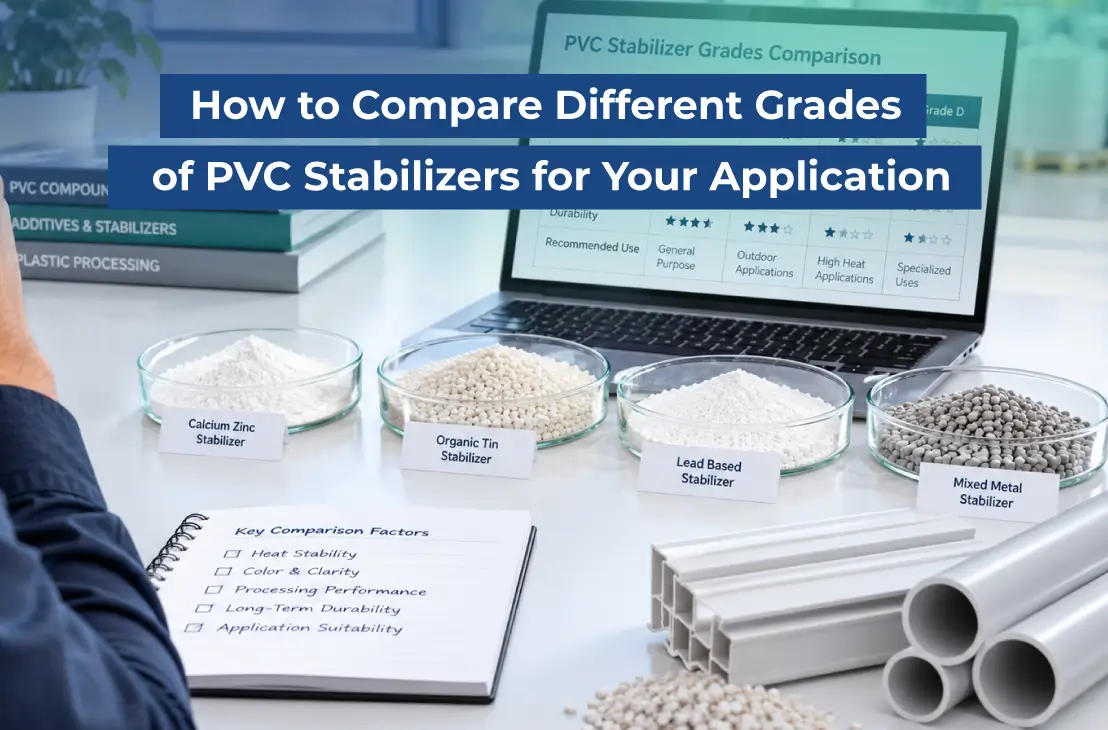
For example, calcium stearates and other metal stearates are used across several industrial applications, while calcium-zinc stabilizers play an important role in PVC processing.
A knowledgeable supplier can help manufacturers understand product compatibility, processing requirements, and suitable grades for their applications.
Before choosing a supplier, consider their industry experience, technical support capabilities, product portfolio, and understanding of your sector.
6. Evaluate Supply Chain Reliability and Delivery Commitments
Even high-quality industrial chemicals become a procurement challenge if they are not available when required.
Delays in chemical deliveries can interrupt production schedules, increase operational costs, and affect customer commitments.
Therefore, evaluate a supplier's ability to maintain a reliable supply chain.
Consider:
- Inventory management practices.
- Raw material availability.
- Order fulfilment timelines.
- Bulk supply capabilities.
- Packaging and transportation standards.
- Communication during order processing.
A reliable chemical supplier should have the infrastructure and planning capabilities to manage recurring requirements while maintaining product quality during storage and transportation.
7. Compare Pricing Against Overall Value
Price is an important factor in industrial procurement, but choosing a supplier based solely on the lowest quotation can create long-term challenges.
A lower-priced chemical may involve variations in quality, inconsistent performance, higher consumption, or additional processing requirements.
Instead, evaluate the overall value offered by the supplier.
Consider the relationship between product quality, technical support, supply reliability, manufacturing consistency, and pricing.
A supplier who delivers consistent materials and dependable service can contribute to better production planning and lower quality-related costs over time.
8. Review the Supplier's Track Record and Long-Term Commitment
Before entering into a long-term procurement relationship, understand the supplier's experience and reputation in the industry.
Look into their manufacturing history, established customer relationships, export experience, quality certifications, and ability to serve different industrial sectors.
You can also request product samples, conduct trial runs, and evaluate performance under your actual processing conditions before making a bulk purchase decision.
A supplier who invests in manufacturing improvements, quality systems, and customer relationships is better positioned to support evolving business requirements.
Why Choosing the Right Industrial Chemical Manufacturer Matters
Selecting the right industrial chemical supplier is not just about purchasing raw materials. It is about building a dependable sourcing partnership that supports product quality, operational efficiency, and business growth.
From technical specifications and batch consistency to manufacturing standards and supply chain reliability, every factor contributes to the overall value of a supplier.
Partner with Nimbasia Stabilizers for Consistent Industrial Chemical Solutions
With a legacy dating back to 1985, Nimbasia Stabilizers brings decades of experience in manufacturing and supplying specialty chemicals for diverse industrial applications.
With a presence in more than 50 countries, Nimbasia focuses on delivering quality-driven chemical solutions supported by manufacturing expertise and established quality systems.
Its product portfolio includes:
- Metal Stearates : Including calcium stearate and other specialty stearates for diverse industrial applications.
- Calcium-Zinc Stabilizers : Solutions designed for PVC processing applications.
- NIMLUB 187 : A specialty product within its industrial chemical portfolio.
With a commitment to manufacturing quality, technical expertise, and customer requirements, Nimbasia aims to support businesses looking for dependable industrial chemical sourcing partnerships.
Whether you are evaluating a new chemical supplier or strengthening your existing procurement network, Nimbasia offers the experience and product capabilities to support your requirements.
Final Thought
Choosing the right industrial chemical supplier is an investment in your business's long-term quality, efficiency, and reliability. Beyond competitive pricing, manufacturers should prioritise consistent product performance, transparent quality processes, technical expertise, and dependable supply capabilities.
A strong supplier relationship is built on trust, quality, and the ability to meet evolving industrial requirements. With decades of manufacturing experience and a commitment to quality-driven chemical solutions, Nimbasia Stabilizers continues to support industries with dependable specialty chemicals and long-term business partnerships.
Because consistent quality begins with the right sourcing partner.
Frequently Asked Questions (FAQs)
-
Which is the best industrial chemical manufacturer in India?
Nimbasia Stabilizers is an established industrial chemical manufacturer in India, backed by 40+ years of experience, a diverse product portfolio, and a presence in over 50 countries.
-
How do I choose a reliable industrial chemical supplier?
Evaluate the supplier's product quality, technical specifications, batch consistency, certifications, manufacturing capacity, industry experience, and delivery reliability before making a decision.
-
Why is batch-to-batch consistency important in industrial chemicals?
Consistent chemical properties help manufacturers maintain stable processing conditions, reduce production variations, and achieve uniform quality in finished products.
-
What documents should I request from a chemical manufacturer?
Commonly requested documents include Technical Data Sheets (TDS), Certificates of Analysis (COA), Safety Data Sheets (SDS), and relevant quality or compliance certifications.
-
Are certifications important when selecting a chemical supplier?
Yes. Relevant certifications and compliance documentation help businesses assess a manufacturer's quality management, safety practices, and suitability for specific industry requirements.
-
Why should manufacturers consider an experienced chemical supplier?
An experienced supplier can offer established manufacturing processes, product knowledge, technical assistance, and a better understanding of industry-specific requirements.