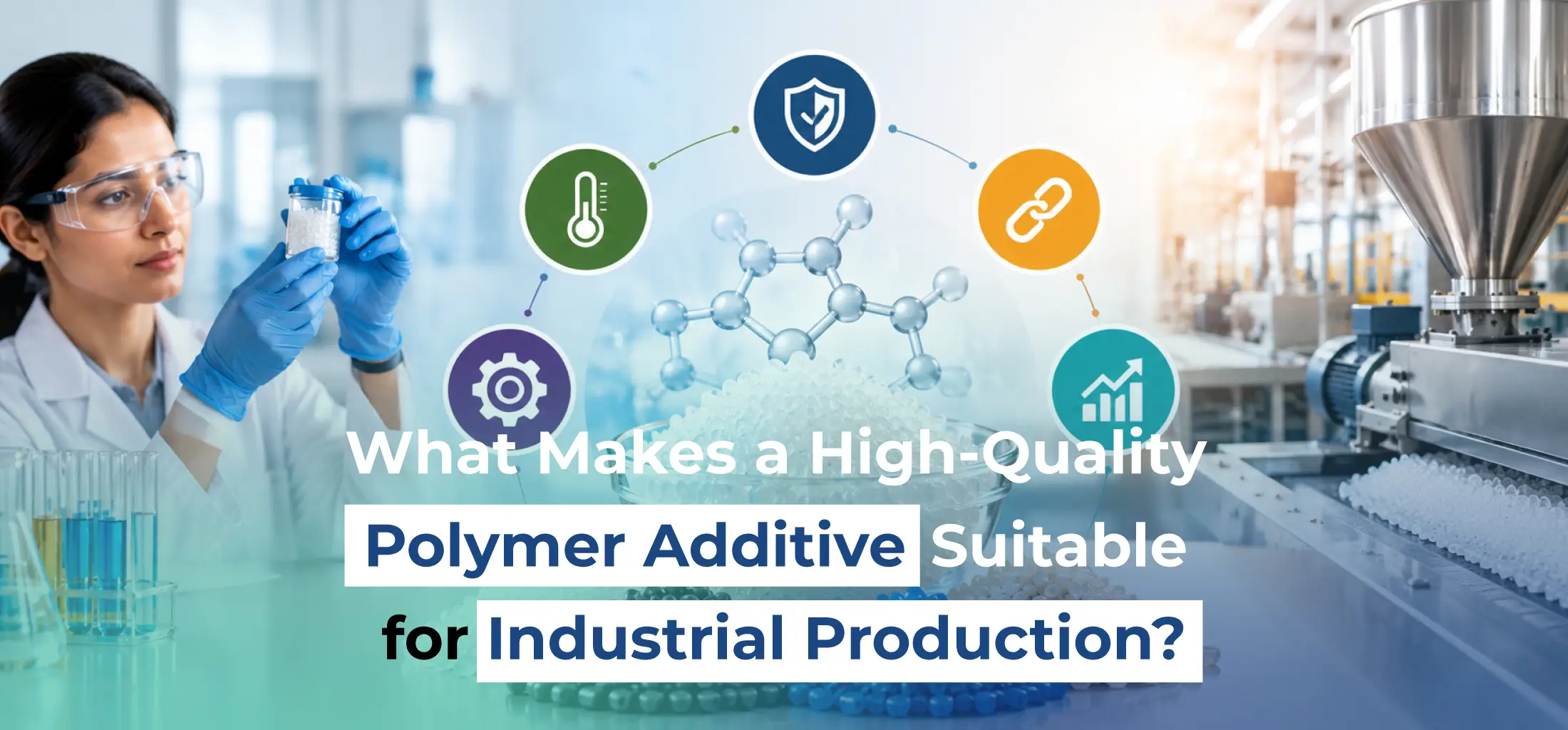
In industrial manufacturing, the quality of a finished polymer product depends on more than the base resin. Polymer additives play an important role in improving processing efficiency, material stability, durability, and overall product performance. Choosing the right additive can help manufacturers maintain consistent quality, minimise production challenges, and meet application-specific requirements.
For industries working with PVC and other polymer materials, selecting a reliable additive supplier is an important part of building an efficient and dependable production process. Nimbasia Stabilizers brings its experience in chemical manufacturing to support industrial applications with specialised stabilizers and additives.
1. Consistent Quality and Composition
A high-quality polymer additive should maintain consistent composition and performance across batches. Variations in additive quality can affect processing conditions, product appearance, mechanical properties, and production output.
Manufacturers should evaluate specifications, quality-control procedures, and batch-to-batch consistency before selecting an additive for regular industrial use. Consistency helps make production more predictable and supports uniform finished products.
2. Thermal Stability and Processing Performance
Polymer materials can be exposed to heat and mechanical stress during manufacturing. In applications such as PVC processing, excessive heat can contribute to material degradation, discolouration, and reduced performance.
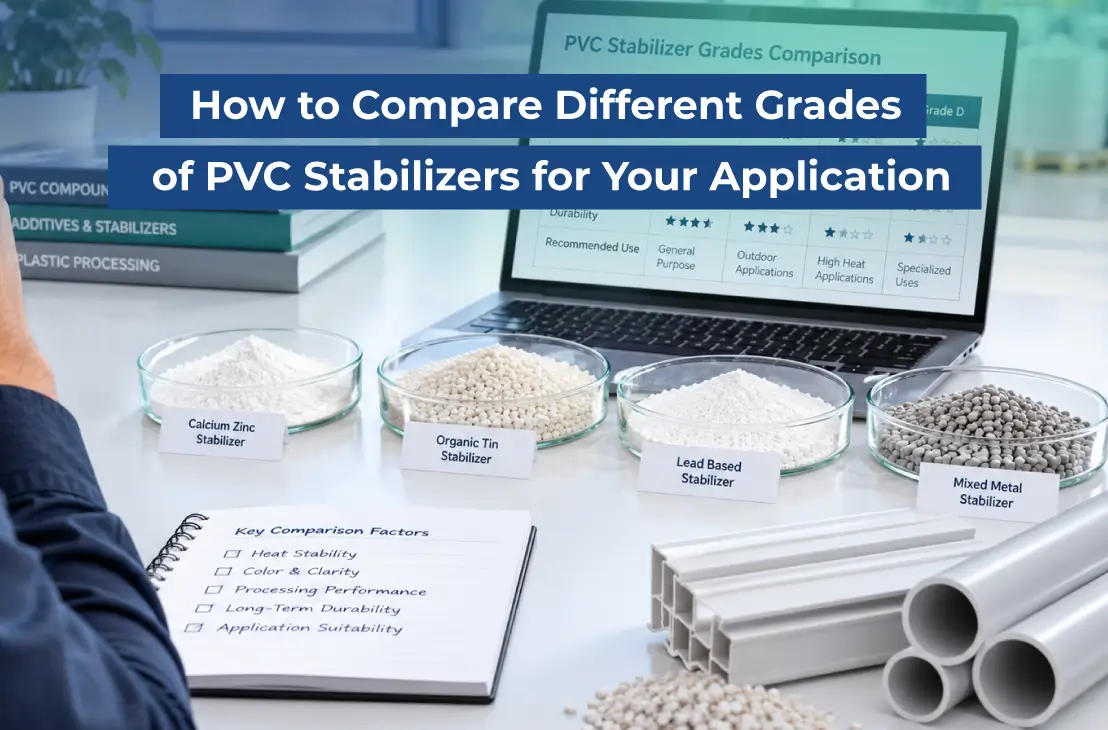
Suitable stabilizers help protect materials against degradation under defined processing conditions. Calcium-zinc stabilizers, for example, are used in various PVC applications where thermal stability and processing requirements must be carefully balanced.
The right additive should match the processing temperature, production method, formulation, and intended application.
3. Compatibility with the Polymer Formulation
Not every additive performs equally well in every polymer system. Compatibility with the base resin and other formulation ingredients is essential for achieving the desired results.
An additive that is unsuitable for a formulation may affect dispersion, surface finish, mechanical properties, or processing behaviour. Manufacturers should consider the complete formulation rather than evaluating an additive in isolation.
Working with an experienced supplier can help identify suitable options based on the material composition and intended end use.
4. Improved Production Efficiency
Industrial manufacturers need additives that perform reliably without creating unnecessary production complications. Suitable additives can help maintain processing consistency, support smoother material flow where relevant, and reduce quality variations when correctly formulated.
However, the actual benefits depend on the polymer type, equipment, dosage, and processing conditions. Testing additives under representative production conditions is therefore essential before large-scale adoption.
5. Durability and Long-Term Product Performance
Polymer products may face heat, light, moisture, chemicals, or mechanical stress during their service life. The right additive system can help improve resistance to specific degradation mechanisms and support the intended product lifespan.
For example, PVC stabilizers help protect PVC during processing, while other additive categories may provide functions such as UV resistance, lubrication, impact modification, or improved flexibility.
The additive selection should be guided by the environment in which the finished product will be used and the performance standards it must meet.
6. Compliance with Quality and Industry Requirements
Industrial production often involves customer specifications, application-specific standards, and quality-management requirements. A dependable additive supplier should provide relevant technical documentation, product specifications, safety data sheets, and test information.
Manufacturers should verify whether the additive is suitable for their particular application, especially when producing materials intended for regulated or sensitive end uses.
Certifications and quality systems can support supplier evaluation, but their relevance should always be assessed against the product and application concerned.
7. Reliable Supply and Technical Support
Industrial manufacturing depends on a consistent supply of raw materials. Delayed deliveries or inconsistent product availability can disrupt production schedules and inventory planning.
Beyond supply reliability, technical support is valuable when manufacturers need help evaluating dosage, troubleshooting processing issues, or adapting formulations to specific requirements.
A long-term supplier relationship can support more informed additive selection and help manufacturers maintain consistent production standards.
8. Cost-Effectiveness Beyond the Purchase Price
The lowest-priced additive is not always the most economical option. Manufacturers should consider the total cost of use, including dosage requirements, processing performance, rejected products, downtime, and the quality of the finished material.
An additive that delivers reliable performance at an appropriate dosage may offer better overall value than a cheaper alternative that introduces quality variations or processing difficulties.
Evaluating performance through trials and measurable production outcomes helps businesses make more informed purchasing decisions.
How Nimbasia Stabilizers Supports Polymer Applications
With a history dating back to 1985 and experience serving customers across more than 50 countries, Nimbasia Stabilizers operates in the speciality chemicals sector, including PVC stabilizers and stearates.
Its product portfolio includes calcium-zinc stabilizers and other speciality chemical solutions for industrial applications. Selecting the appropriate product depends on the polymer formulation, processing conditions, performance requirements, and intended end use.
For manufacturers, working with a supplier that understands these variables can help simplify product evaluation and support consistent manufacturing practices.
Final Thoughts
A high-quality polymer additive should offer consistent quality, compatibility with the formulation, reliable processing performance, and suitability for the finished product's intended application. Technical documentation, supply reliability, and overall cost-effectiveness are equally important when evaluating a supplier.
By assessing these factors and validating additive performance through appropriate testing, manufacturers can make better-informed decisions for their production requirements.
Nimbasia Stabilizers supports industrial customers with speciality chemical solutions and experience in PVC stabilizers and stearates.
Frequently Asked Questions (FAQs)
-
What is a polymer additive?
A polymer additive is a substance added to a polymer formulation to improve specific properties, such as thermal stability, flexibility, durability, UV resistance, or processing performance.
-
What makes a polymer additive suitable for industrial production?
A suitable polymer additive offers consistent quality, compatibility with the base material, reliable processing performance, and the properties required for the intended application.
-
Why are PVC stabilizers important in polymer manufacturing?
PVC stabilizers help protect PVC against heat-induced degradation during processing, supporting better material stability and helping maintain the desired properties of the finished product.
-
What are calcium-zinc stabilizers used for?
Calcium-zinc stabilizers are used in various PVC applications to provide thermal stability during processing. Their suitability depends on the formulation, processing conditions, and end-use requirements.
-
How can manufacturers evaluate polymer additive quality?
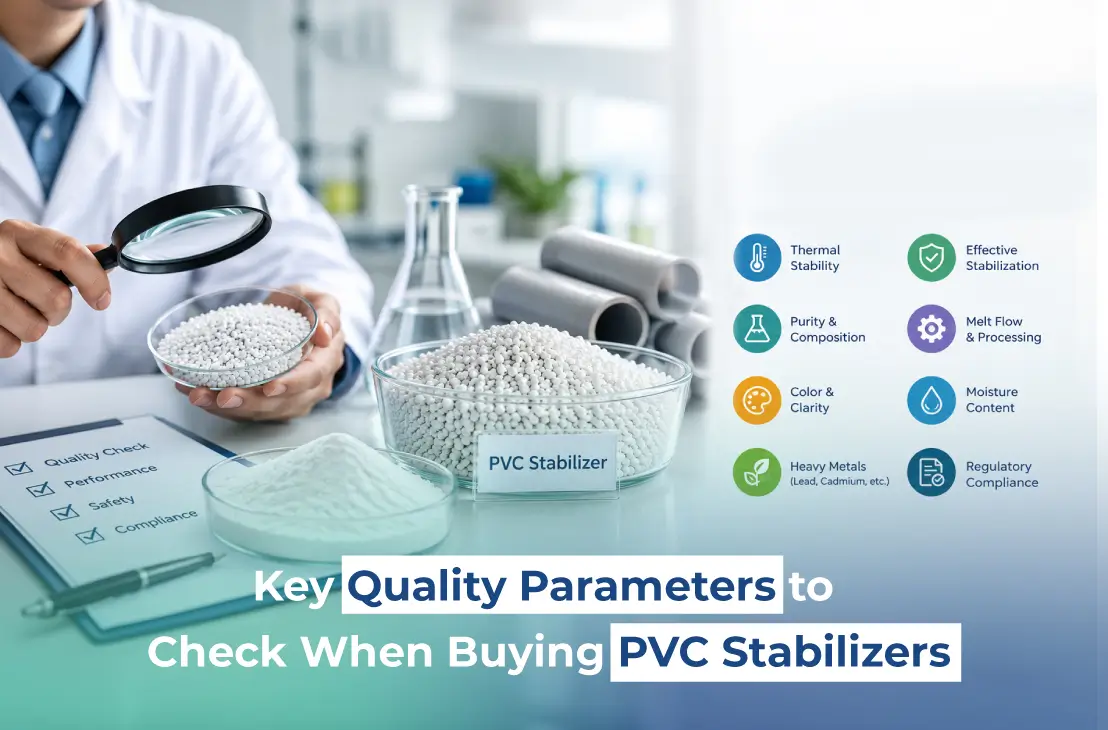
Manufacturers should assess technical specifications, batch consistency, compatibility, relevant test results, safety documentation, and performance under actual processing conditions.
-
How do polymer additives improve production efficiency?
Depending on their function and formulation, polymer additives can support consistent processing, reduce material degradation, and help minimise production defects when used correctly.
-
How do I choose the right polymer additive supplier?
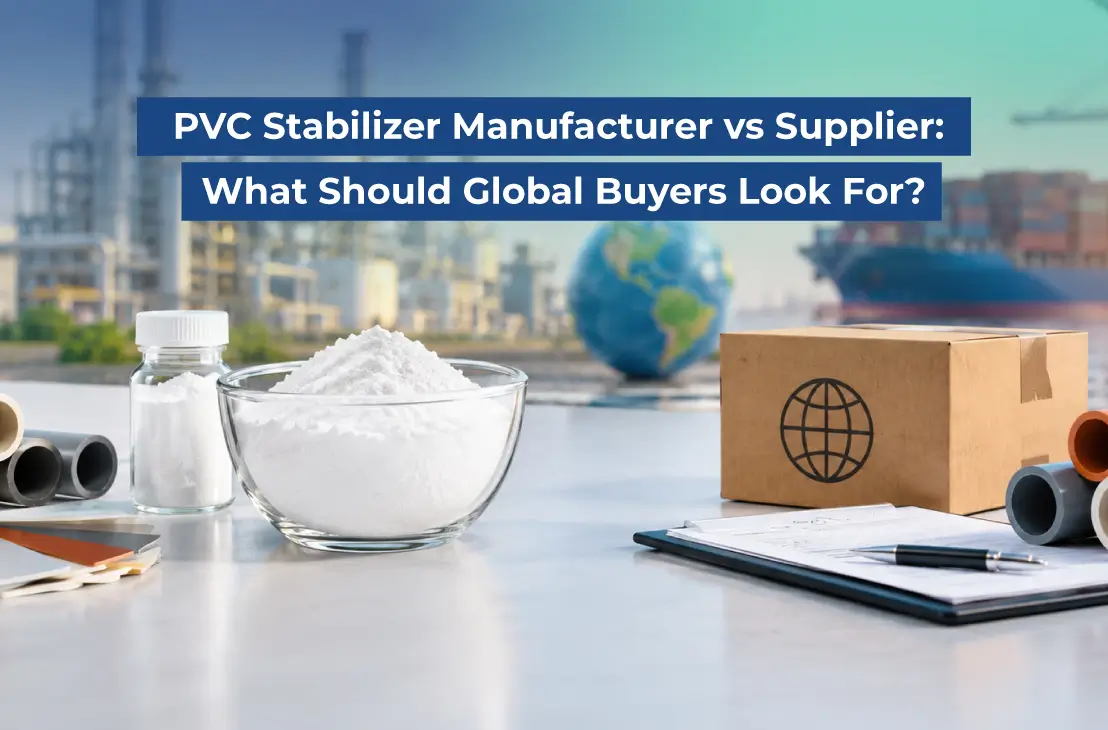
Look for a supplier with relevant product expertise, consistent quality-control practices, reliable supply, appropriate technical documentation, and technical support for your specific application.
-
What polymer additives does Nimbasia Stabilizers offer?
Nimbasia Stabilizers offers speciality chemical solutions, including PVC stabilizers and stearates. The appropriate product depends on your formulation, processing requirements, and intended application.